
Arizona residents who purchase health insurance through the ACA marketplace are facing significant premium increases in 2026 unless congress acts to extend enhanced premium tax credits by September 30.
The enhanced tax credits expanded eligibility and increased subsidies for individuals and families purchasing insurance through the ACA marketplace. These enhancements were extended through 2025 but expire at the end of this year. Without these credits, many enrollees will see their premiums rise substantially.
Az’s healthcare premiums set to soar on 2026 online marketplace
If Congress doesn’t extend the expanded tax credits Marketplace insurance rate increases will range from 2.5% to over 55%. The increase isn’t all due to the end of the enhanced tax credit – but most of it is.
For example, a 60-year-old couple earning $80,000 annually (approximately 405% of the federal poverty level) currently pays $567 per month for their health insurance. If the enhanced credits expire, their monthly premium could more than triple to $2,026, an annual increase of $17,500. Approximately 300,000 Arizonans rely on the ACA marketplace for their health insurance coverage.
Summary of the History of Marketplace Tax Credits
2010–2013: From Law to Implementation
- March 23, 2010: When the Affordable Care Act (ACA) was signed into law, it established the framework for advanceable, refundable premium tax credits for individuals and families purchasing insurance through the Marketplace.
- 2013: The Federally Facilitated Marketplace opened to enroll individuals in Marketplace plans eligible for APTC.
- 2014: APTCs became available. IRS made them advanceable and refundable, meaning enrollees received payments throughout the year.
- March 2015: Enrollment rose to 10.2 million, with 85% receiving APTC. Cost-sharing subsidies also aided affordability. Among HealthCare.gov users, over 8 in 10 new or renewed enrollees received an average APTC of $268/month, reducing premiums by roughly 72%. Many had net premiums under $100.
2021–2022: American Rescue Plan Act Expansion
- March 11, 2021: President Biden signed the American Rescue Plan Act:
-
- Eliminated the 400% FPL “subsidy cliff”, making higher-income households eligible for APTC.
- Capped contributions so that no household paid more than 8.5% of income toward premiums.
2023–2025: Extended Subsidy Enhancements (IRA)
- The Inflation Reduction Act (2022) extended the ARPA enhancements through December 31, 2025.
- These enhancements enabled:
-
- A dramatic increase in marketplace enrollment from 11.2 million in 2021 to 20.8 million in 2024.
- Sustained population eligibility across income levels thanks to the phased-out subsidies rather than an abrupt cutoff.
Summary
Starting in 2026, the rules will revert to the pre-pandemic structure that was in place in 2020 unless Congress acts to extend the IRA and ARPA enhancements :
- Eligibility capped at 400% of the federal poverty level (FPL)→ If your income is just above that threshold, you’ll no longer qualify for any premium help.
- Smaller subsidies within the 100–400% FPL band→ Credits won’t be as generous, so even people who still qualify will see higher premiums.
- “Subsidy cliff” returns→ A family just over 400% of FPL will lose thousands of dollars in annual subsidies, even if their premiums are a large share of income.
- Higher net premiums for lower-income enrollees→ Because the ARPA/IRA boosted subsidies most strongly for people below 250% of FPL, their share of income required for coverage will jump back up.
- The 8.5% of Income Premium Cap ends
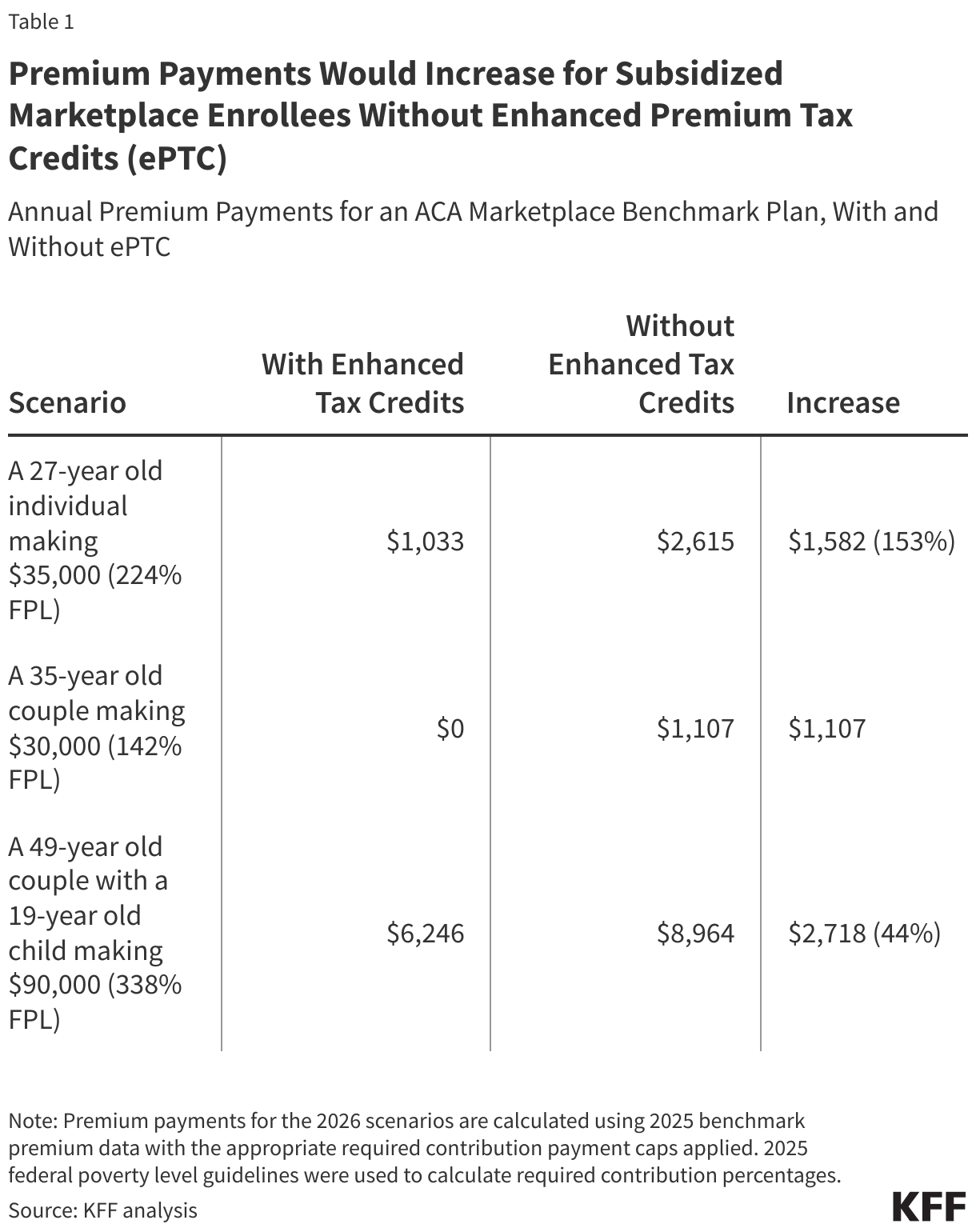
Premium Payments Would Increase for Subsidized Marketplace Enrollees Without Enhanced Premium Tax Credits
Annual Premium Payments for an ACA Marketplace Benchmark Plan, With and Without ePTC
| A 27-year old individual making $35,000 (224% FPL) | $1,033 | $2,615 | $1,582 (153%) |
|---|---|---|---|
| A 35-year old couple making $30,000 (142% FPL) | $0 | $1,107 | $1,107 |
| A 49-year old couple with a 19-year old child making $90,000 (338% FPL) | $6,246 | $8,964 | $2,718 (44%) |
Premium Payments if Enhanced Premium Tax Credits Expire | KFF
Without renewal, the system resets to the original ACA design, which was still helpful for many, but left a lot more people facing unaffordable premiums, especially middle-income households just over the 400% FPL threshold who will stand to pay more than 8.5% of income for premiums.
Scenario Note: With the enhanced tax credits in place, Marketplace enrollees making between 100%-150% of the federal poverty level are eligible for a fully subsidized benchmark plan. Prior to the availability of the ePTCs, enrollees making just above the poverty level were expected to contribute about 2% of their household income towards a benchmark plan. If the enhanced tax credits expire, low-income enrollees (currently paying $0 for a benchmark plan) will have to start paying for coverage again. For example, a 35-year-old couple earning $30,000 can expect to start paying $1,107 annually for a Marketplace benchmark plan.