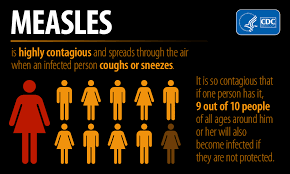
New York Governor Hochul declared a statewide measles disaster emergency on October 5 after NY state documented at least 108 cases of measles this year (it’s probably a lot more than that though).
Most recent cases have been in under-immunized rural upstate NY. Her declaration runs through November 4 unless extended.
But what does declaring an emergency actually do?
EO No. 65: Declaring a Disaster Emergency in the State of New York Due to an Ongoing Measles Outbreak essentially temporarily expands the scope of practice for a host of health professionals so they can vaccinate people more quickly.
It also lets state agencies buy supplies and services faster (easing their procurement policies). Her goal seems like an attempt to get ‘all-hands-on-deck’ by helping county health departments reach unvaccinated and under-vaccinated people much faster.
New York’s Executive Order 65 makes several specific changes:
- Pharmacists can vaccinate younger kids. They can administer the measles, mumps and rubella vaccine to kids age 2 and older under standing orders (relieving pediatric office bottlenecking).
- Paramedics can give MMR vaccines at community clinics and other non-emergency locations.
- Midwives can vaccinate a broader population, beyond their usual patients (under specified supervision and conditions).
- Registered nurses can order measles testing. Standing orders expand RN’s scope so they can collect throat, nasal, urine and blood specimens without getting a separate order for each patient.
- State agencies can use faster emergency procurement and contracting to obtain supplies, equipment and services that support the response.
These changes give counties more people to staff vaccination clinics and help families find vaccination closer to home. They also remove regulatory barriers that otherwise slow down testing.
Faster testing will give county health departments earlier warning about where measles is spreading so they can find exposed people, check immunity and vaccinate while there’s still time to prevent illness.
NY county health departments were already investigating cases, tracing contacts and offering vaccines before the declaration. But under the new Order they can expand the workforce and speeds up their response
They can also use pharmacists, paramedics and midwives as a temporary surge workforce to vaccinate (and a surge workforce using RN’s to collect specimens etc.)
People born before 1957 generally had measles as children and are presumed immune.
Adults vaccinated before the two-dose recommendation began in 1989 (people currently between 37 and 66 years old now) may have received only one dose. One is still sufficient for most adults, but a second is recommended for healthcare workers, international travelers and college students.
People younger than 37 likely to have received the two-dose childhood series and don’t need a booster.
Editorial Note: In my view, New York’s approach is precisely how public health emergency authorities should be used: temporarily remove barriers, expand the workforce and give county health departments more tools to protect people.
Arizona experienced a misuse of public health emergency authority during the pandemic. Governor Ducey and health director Christ initially blocked local mask requirements and used their emergency authority to prohibit state and local governments from requiring proof of COVID-19 vaccination for entry or services.
Their executive orders called vaccination records “vaccine passports” giving an ordinary public health tool a politically loaded label. In my view, those restrictions and many others in which Ducey and Christ preempted local government, schools, and even businesses from taking reasonable response measures.
That undermined the response by taking protective options away from local officials and ended up harming, not helping the response. They grossly misused Arizona’s public health emergency authority.