
The measles virus found some fertile ground to flourish up in Colorado City, AZ.
Why is it fertile ground?
Because the childhood immunization rates in that community are astonishingly low (well below herd immunity levels) so it’ll be super easy for the virus to infect new susceptible kids.
Note: Only 7.7% of kindergarten students at Colorado City’s Cottonwood Elementary have had the MMR vaccine. Only 40% of kindergarten students at Masada Charter School are vaccinated.
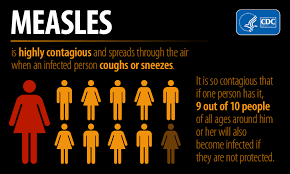
What started with one case a couple of weeks ago has now grown to at least 9 cases. Measles spreads super easy via coughing, sneezing, or even just being in the same room as someone who is infected.
An Arizona town is at the center of a budding measles outbreak | Phoenix New Times
The Mohave County Department of Public Health, led by Health Director Melissa Palmer, and her team have been “all hands on deck” to slow this outbreak.
Their team is working long hours to find people who may have been exposed, help infected people voluntarily isolate so they don’t spread it further, supporting families who need to stay home in voluntary quarantine, and encouraging families to choose to vaccinate their kids before they too become infected(vaccines are readily available at the Creek Valley Health Clinic).
Mohave County also held a vaccine event in the community Friday that vaccinated over 80 children and adults. Director Palmer reports good communication with the residents, and their nursing manager and Palmer will be meeting with the school board on Monday.
This outbreak is especially hard to manage because of two big challenges.
First, vaccination rates in Colorado City are very low. Many (probably most) kids there have not received the MMR vaccine, which is the best protection we have against the disease.
Second, most kids in the community are homeschooled through the state’s ESA voucher program. In most outbreaks, health departments can use school records to quickly find which children are vaccinated and which are not. In Colorado City, that tool isn’t available.
Instead, public health staff have to do “retail contact tracing” like finding and talking with families one at a time. That takes a lot of time and effort.
One factor working in the community’s favor is that so many kids are homeschooled via ESA vouchers – and there are likely to be fewer large scale school exposures than in other towns.
Note: There are 476 ESA recipients among 783 houses in Colorado City’s ZIP code
But… other types of community gatherings can spread the virus fast like church services and activities, 4H activities, playdates, birthday parties and family visits.
The good news is that if health officials find exposed people fast enough, they can sometimes stop measles. But that requires cooperation from the community.
For example, if someone who isn’t vaccinated gets the MMR shot within 72 hours after being exposed it can protect them or at least make the illness less severe.
This outbreak is a reminder that measles isn’t a problem from the past. It’s now in the present and will remain so until immunization rates improve to levels they were 15 years ago.
Mohave County’s public health team deserves a lot of credit for stepping up at showtime… but this will be a challenging outbreak to deal with especially if there’s little community cooperation.