
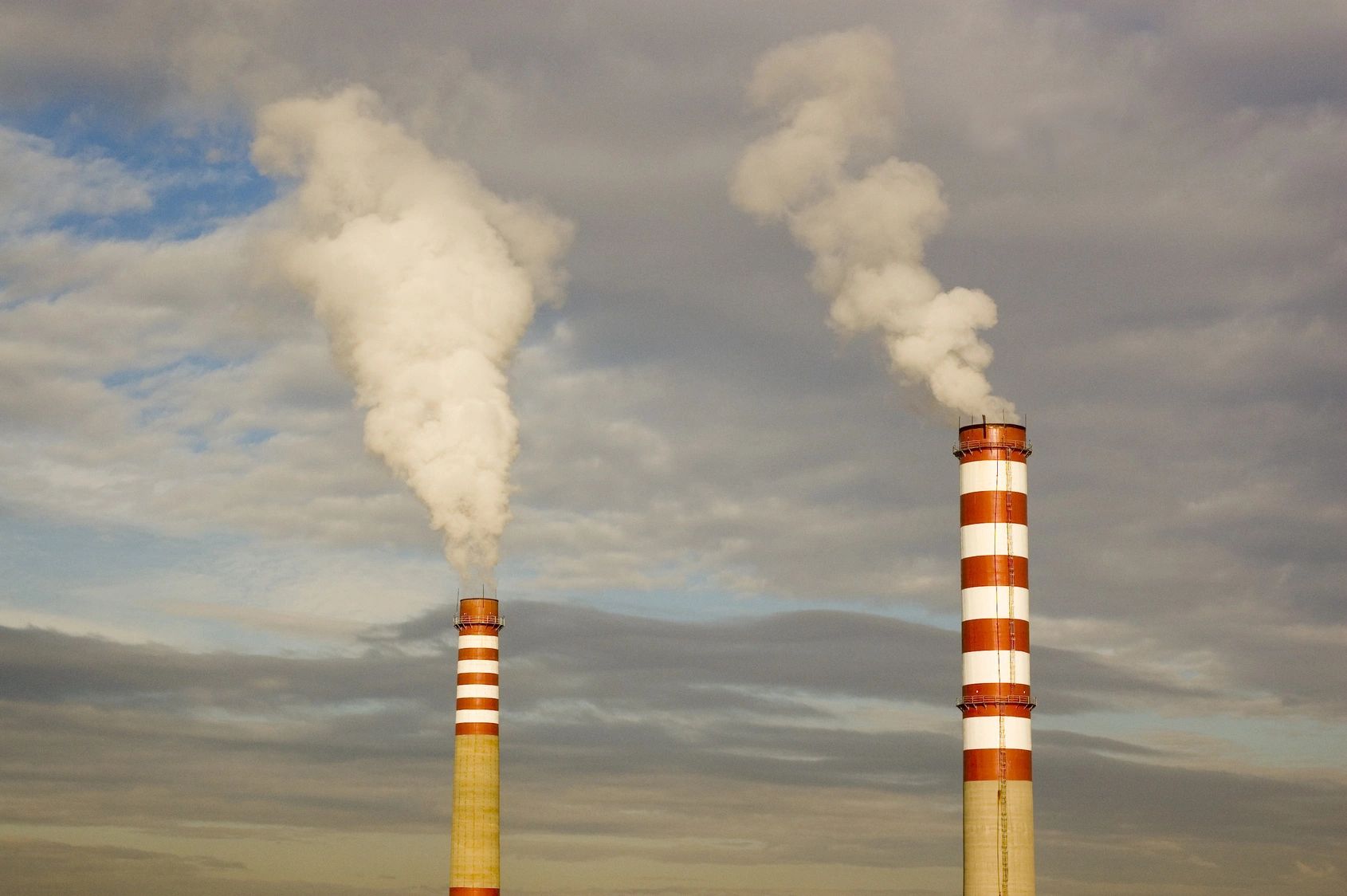
EPA Decides that CO₂ Isn’t a “Danger” Anymore So they Can Reverse Carbon Emission Standards

This week, the EPA Administrator said he will rescind their 2009 Endangerment Finding that has underpinned the EPA’s regulation of carbon dioxide (CO₂) and other greenhouse gases. If upheld by the courts the decision will eliminate the EPA’s regulations on greenhouse gases with implications for global climate change.

How the EPA Came to Regulate CO₂

The foundation for regulating carbon dioxide traces back to the 1970 Clean Air Act which authorizes the EPA to regulate air pollutants that may endanger public health.

Initially, CO₂ and other greenhouse gases weren’t considered pollutants under the law. That changed with the 2007 Supreme Court case Massachusetts v. EPA, in which the Court ruled that greenhouse gases are air pollutants under the Clean Air Act and must be regulated if the EPA determines they pose a risk.

In 2009, the Obama-era EPA issued the Endangerment Finding, concluding that CO₂ and other greenhouse gases DO endanger public health and welfare due to their role in climate change.

That triggered regulatory requirements, starting with fuel economy and emissions standards for motor vehicles, regulations on large industrial sources like power plants, cement manufacturers, and oil refineries.

Industry Compliance and Enforcement

Over the next several years the EPA launched a suite of regulatory actions like Vehicle Emission Standards, permitting of major industrial sources, and the 2015 Clean Power Plan which focused on making electricity plants slowly shift to lower-emission sources.

Enforcement came through a mix of permit requirements, monitoring and reporting standards, and potential penalties for noncompliance.

The Decision to Overturn the Endangerment Finding

The new EPA now argues that the scientific and legal basis for the Endangerment Finding is flawed and that carbon dioxide and other greenhouse gases (methane) don’t meet that standard anymore – which if upheld by the courts would eliminate all the reduction measures developed and implemented since 2009.

Legal Challenges and the Role of the Courts

Given that the 2009 Endangerment Finding has survived multiple legal challenges, EPA’s reversal is almost certain to be challenged in court.

Expect lawsuits from states, environmental groups, and possibly some industry players who have already invested in compliance and want regulatory certainty.

Courts will scrutinize whether the EPA has a sufficient scientific and administrative record to justify rescinding a long-standing finding that has been upheld multiple times, including at the US Supreme Court.

The Post-Chevron Legal Landscape

Meanwhile, the legal playing field has changed since 2009 with the US Supreme Court’s decision to overturn Chevron deference (a decades-long doctrine that instructed courts to defer to reasonable agency interpretations.

Without Chevron in place, courts are more likely to second-guess the EPA’s interpretations of the Clean Air Act, including this decision by giving judges more leeway in questioning and staying agency decisions, like this one.

Looking Ahead

Legal challenges will likely stretch on for years and so will the uncertainty facing regulators, industries, and communities dealing with the accelerating impacts of climate change.

In the short run, much will depend on what federal District and Appellate courts decide… and whether they issue a Stay on the EPA decision.

In the long run, much will depend on the results of the 2028 presidential election.

How Arizona’s Data Center Boom Could Hike Your Power Bill & Harm Public Health

Anybody who has driven around the Phoenix metro area knows that Arizona is a magnet for massive data centers. It’s those giant warehouse-looking buildings with electrical substations nearby and really small parking lots (very few people actually are employed at these giant power-hungry box buildings). Those warehouse-sized facilities you see store digital data and power AI.

Tech companies see Arizona as an ideal location due to cheap land and captive utility regulators.

The problem is that these massive facilities use gobs of electricity and water which ends up posing a threat to public health, water security, and the household budgets of everyday Arizonans.

Here’s how.

The proliferation of data centers puts pressure on monopoly utilities like Arizona Public Service and Tucson Electric Power to seek new energy sources and build out costly infrastructure (e.g., gas-fired power plants, transmission lines, substations).

The big public health concern is who pays? Will it be the data centers who are driving the demand or residential ratepayers who risk footing the bill through higher utility rates?

To meet the data center demand surge APS and TEP will likely press to build more methane-burning gas plants, which will increase greenhouse gas emissions and worsen local air pollution.

But there’s a less visible and potentially more damaging risk. The cost of building out the infrastructure to serve data centers like the power plants, substations, and transmission lines aren’t necessarily being paid for by the data centers.

Instead, the data centers cozy relationship with utilities like APS and TEP (and the ACC’s cozy relationship with APS & TEP) end up facilitating rate hikes with little assurance that costs due to data centers won’t be piled onto regular residential customers.

APS already secured an 8% residential rate increase and is now asking for another 14%. TEP is doing the same. And these hikes hit hardest where families can least afford them.

In Arizona, energy bills are often the second-largest household expense after rent. High electricity rates leaves low income families with even less money for food, school supplies, and healthcare, all while living with the stress of rising monthly bills.

A core problem? Arizona lacks clear standards to ensure data centers pay for all the infrastructure required to satisfy their demand.

In Arizona, the Arizona Corporation Commission is the regulatory body tasked with ensuring that utilities operate in the public interest. This includes:

  • Reviewing and approving rate hikes proposed by utilities;
  • Requiring utilities to justify capital expenditures;
  • Allocating costs based on who caused them (known as “cost causation”);
  • Holding public hearings where advocates can push back on unfair rate design; and
  • Making final decisions about whether to approve rate requests.

The ACC can reject rate proposals that shift disproportionate costs to residential customers. It also has authority to require special rate structures or impact fees that place more of the burden on large industrial users with political connections and the ability to provide large campaign contributions (like data centers).

But… protections for residential ratepayers are only as strong as the Commission’s willingness to:

  • Independently scrutinize forecasts and financial impacts;
  • Reject unjustified investments; and
  • Impose fair cost-allocation rules.

The tools exist for the Commission to protect residential rate payers, but that depends on the ideology and political will of the Commissioners, data transparency and whether or not Commissioners and staff use unbiased analyses.

Meanwhile, the Data Center Coalition, an industry trade group, has plainly said it doesn’t believe rate protections for residential customers are necessary. See Arizona utilities: Data centers could nearly triple energy demand

Without better safeguards to ensure data centers aren’t cost shifting infrastructure costs on to residential customers ordinary Arizonans will be stuck with the environmental and financial fallout… with damaging results for public health.

We need stronger oversight from the ACC, more transparency about who pays for what, and written policies that put health, fairness, and affordability first. Otherwise, the cost of powering Arizona data centers will come down on the people least able to afford it and who aren’t causing it.

It would surely help if voters would elect ACC commissioners who protect residential customers rather than power company executives and monopoly utility shareholders.

Summary

Arizona’s utilities are under pressure to meet growing electricity demands from data centers which cause expensive infrastructure costs. The Arizona Corporation Commission has the authority to protect residential customers from subsidizing those costs—but only if it actively enforces cost-causation principles and rejects unfair rate hikes.

Without strong oversight and transparency, residential ratepayers will be unfairly forced to pick up the tab for infrastructure that primarily benefits private data companies.

Improve Your Sleep Performance: Tools to Help You Sleep Better

These are stressful times for public health practitioners and researchers… especially those of you dealing with the barrage of changing directives from the feds and their whimsical and thoughtless budget cut decisions.

It may be even affecting the quality of your sleep…  something that’s key to keeping a work life balance and better perspective.

Beyond feeling rested, sleep helps your mood, focus, metabolism, heart health, and immune function. Over time, poor sleep can raise the risk for chronic conditions like depression, diabetes, and cardiovascular disease.

Sleep needs change across the lifespan. Adults typically need at least 7 hours per night, while teens and children need more. The quality of that sleep and how well you fall and stay asleep matters just as much as the quantity.

So, what can you do to improve your sleep performance?

Build Habits that Improve Sleep Performance

Want better sleep? Start with your daily routines. These habits can help improve your sleep performance with the combination of sleep duration, quality, and regularity that influences how well-rested you feel.

  • Keep a consistent schedule: Go to bed and wake up at the same time every day—even weekends.
  • Create a wind-down ritual: Dim lights, read, stretch, or take a warm shower an hour before bed.
  • Make your sleep space comfortable: A cool, quiet, and dark room supports deeper sleep. Consider blackout curtains, a fan, or white noise i (your phone probably has white noise in the accessibility setting).
  • Avoid screens at night: Blue light from phones and TV can disrupt your body’s melatonin production. Avoid your phone and especially doomscrolling before bed.
  • Watch food and caffeine: Avoid large meals, alcohol, and caffeine in the hours before bed.
  • Be active, but time it right: Regular exercise promotes better sleep but try to finish intense workouts at least 2–3 hours before bed.

Track Your Sleep with Wearables

Many people are now using smartwatches, rings, and fitness trackers to monitor their sleep. Devices from brands like Fitbit, Apple, Garmin, WHOOP, and Oura can give you data about:

  • Sleep duration: Total hours slept each night
  • Sleep stages: Light, delta, and REM cycles
  • Sleep regularity: Consistency of sleep/wake times
  • Sleep interruptions: Wake episodes during the night

These tools will help you quantitatively measure how well you’re sleeping and help you recognize trends. If you keep a journal that tracks what you did before bed and match that up with the results you get for that night it will give you some clues about what you can improve.

Troubleshooting

If you’re still tired after 7–8 hours in bed, snore heavily, or often wake during the night, you could have a sleep disorder like sleep apnea and it’s worth seeing a medical professional.

Note: I discovered that I had sleep apnea about 15 years ago. I saw my ENT and he assessed that I had a ‘world class uvula’ and suggested that I vaporize it. He used a laser beam to burn off my uvula and some of my soft palate and my sleep has been MUCH better since.

For short-term sleep support, melatonin supplements might help reset your body clock or ease jet lag. CBN (cannabinol), a cannabis-derived compound available at dispensaries, is also an effective sleep aid for some people. They’re not magic solutions and work best when paired with good sleep hygiene.

Sleep Performance: A Skill You Can Build

Start by quantitatively measuring your sleep performance, make one or two small changes, and evaluate the result with the data you collect… then experiment with other sleep hygiene strategies until you get results.

More: Sleep Hygiene | CDC

Senate Confirms New CDC Director: What’s She Like?

The U.S. Senate confirmed Susan Monarez, PhD as Director of the CDC this week on a 51–47 party-line vote. I did some checking with my CDC sources… and from what I can tell, the appointment choice was about as good as we could expect from Kennedy.

Kennedy Swears in Susan Monarez as CDC Director | CDC Newsroom
Susan Coller Monarez | LinkedIn

Monarez has a Ph.D. in microbiology/immunology from the University of Wisconsin–Madison and has done postdoctoral work at Stanford.

While she took some heat for not being an MD at her hearing, that’s not a big deal to me. I’m more interested in whether a person has a reputation of using evidence to drive the agency’s decisions and has shown they can effectively manage a large organization with integrity and fidelity to evidence.

From what I can tell from my sources, Monarez has a reputation of basing her opinions and decisions on evidence rather than ideology. Some said she has a reputation for being too deferential to leadership. Such a personality trait is bad given that she reports to Kennedy – so that’s not so great.

At her confirmation hearing last week, she sidestepped questions related to Kennedy’s recent and proposed future budget and staffing cuts at CDC as well as the dismissal of all members of ACIP and replacing them with mostly anti-vax ideologues. That’s not good.

On the other hand, she emphasized at the hearing that vaccines save lives & said she has seen no evidence to suggest there’s a causal link between vaccines and autism. She promised to maintain vaccine availability and make policy decisions based on scientific evidence, including around mRNA vaccines. So those are good things.

Sadly, none of the Senators asked Monarez about her commitment to or opinions about the Vaccines for Children program. Those would have been important questions, as VFC is among the biggest levers Kennedy has to achieve his goal of fewer vaccinations.

Mostly folks said they were relieved that Monarez is a career public health person with research, policy, and management experience and that her decisions over her career have generally been grounded in evidence.

Time will tell but seems to me it could have been worse. A lot worse.

Arizona Again Among the Worst States for Childhood Vaccination Rates

Each year, the CDC compiles and releases data on childhood immunization rates across the country by examining school-reported data on kindergarten vaccine coverage and exemption status.

Since there’s no national requirement for individual-level vaccine reporting, the best available proxy for estimating childhood vaccination rates is the percentage of kindergartners who are not exempted from school vaccine requirements. States compile and report this data to the CDC, which typically summarizes it in a Morbidity and Mortality Weekly Report (MMWR).

Instead of an MMWR summary with trend analysis and public health context, the CDC quietly released a spreadsheet (without commentary) this year listing each state’s kindergarten coverage rates for vaccines like MMR (measles, mumps, and rubella), DTaP, polio, and varicella. You can find that raw data here: CDC Kindergarten Vaccination Data 2025 (Excel Spreadsheet)

Arizona Ranks 40th of 51 in MMR Vaccine Coverage

This year’s numbers show that just 88.6% of Arizona kindergarteners are up to date on their MMR vaccines, placing Arizona 40th out of 51 (the 50 states plus D.C.). See that Chart Here.

That’s a drop of 0.6% from last year, consistent with a trend we’ve seen for more than a decade, where Arizona’s coverage falls by roughly half a percent every year.

The national picture isn’t much better, but Arizona’s continued slide is alarming—especially considering that the MMR vaccine is essential to preventing measles outbreaks, which have been on the rise globally and domestically.

AZ Childhood Vaccination Rates Declined During the Ducey Administration: Is it Bad Luck or Bad Policy & Management?

ADHS Announces Positive Changes to their Vaccines for Children Program!

An Unusual Pattern in Public Health Rankings

Most public health outcomes tend to follow a familiar regional pattern: Northeastern and West Coast states (typically those with stronger public health infrastructure and progressive policy environments) perform well, while Southern states (those in the “SEC Conference” region) have the worst outcomes.

But vaccination rates is an exception.

For example:

  • Mississippi, a state that usually performs poorly in health rankings, has among the highest childhood vaccination rates in the country.
  • Meanwhile, Minnesota, often considered a leader in health policy, has one of the lowest vaccination rates, even worse even than Arizona.
What Explains the Difference?

Policy.

States like Mississippi don’t allow personal or philosophical exemptions to school vaccine mandates. In other words, unless there’s a medical reason, their kids need to be vaccinated to attend school.

In contrast, states like Arizona have permissive exemption policies that allow parents to opt out of school vaccination requirements for personal or religious reasons. Unsurprisingly, those states consistently rank near the bottom in vaccine coverage.

Why It Matters

The decline in vaccination rates, especially for highly contagious diseases like measles, isn’t just a bureaucratic issue. It puts entire communities at risk. MMR vaccine coverage needs to be above 90–95% to have herd immunity and prevent outbreaks. Arizona, like many other states, is now falling below that threshold.

The Bottom Line

Arizona’s persistent decline in MMR vaccination rates should be setting off alarm bells. We now rank in the bottom 20% of the country, and our trendline shows no sign of reversal. Policy decisions, especially around whether states allow personal choice exemptions are a major reason.

Thankfully, Governor Hobbs has consistently been vetoing bills that would have thrown gas on the fire.

Public health stakeholders, lawmakers, and communities need to pay attention. We know what works, no personal exemptions for school attendance.

Note: For decades, CDC published this data in the form of an MMWR report. This year, it was released only as a raw spreadsheet with no accompanying analysis or context.