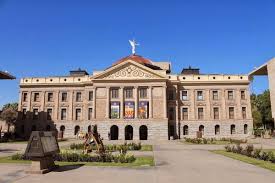
The Arizona House is expected to pass HCR2056 next week. If that happens, the Senate becomes the last real opportunity to stop it. Because this is a referendum, the Governor can’t veto it. It would go straight to the November ballot.
On the surface, HCR 2056 sounds simple. It proposes a constitutional amendment recognizing a broad “right to refuse medical mandates.” The language is framed around personal freedom and bodily autonomy.
But here is what the measure actually does: It effectively ends school vaccine requirements, undermines public health authority, and takes away the ability of schools and preschools to protect students from exposure to a host of disease and infestation threats.
Arizona voters could decide future of vaccine mandates in November
The constitutional amendment (if approved by voters) would prohibit government entities from requiring individuals to accept medical products or treatments as a condition of employment, education, or access to public spaces. That includes schools.
While the proposal never explicitly says “this eliminates school vaccine requirements,” that’s what it would do. Arizona’s longstanding immunization requirements for school attendance would be unenforceable. Additionally, if the voters approve it, a judge will surely say the existing school vaccine requirements are unconstitutional and order them to stop.
Public schools could no longer require routine childhood vaccinations as a condition of enrollment.
But there’s more.
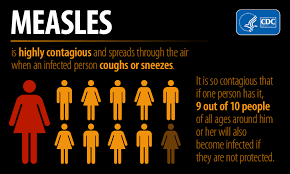
Under current law, county health officers have authority to exclude unvaccinated students from school during outbreaks of diseases like measles AAC 9 Title, Chapter 6 Article 33 AZ Administrative Code… a long-standing public health tool used to slow transmission and protect medically vulnerable children.
A tool that will be increasingly important as measles again becomes endemic because of falling vaccination rates (even without a constitutional amendment ending school vaccine requirements).
If this constitutional amendment passes, that authority would disappear too. During a measles outbreak in a school, local health officials couldn’t exclude unvaccinated students while the outbreak is being contained (until they get vaccinated).
Likewise, schools wouldn’t be able to protect students from exposures to diseases and conditions like Meningococcal meningitis, Diphtheria, Typhoid, Scabies, and even Lice.
Using the lice example, a school or preschool would no longer be able to send a kid home from school or preschool pending application of anti-lice medication (pediculicide). Same thing for the other diseases listed above.
Again, the proposal doesn’t say this directly, which is why it’s so sneaky.
HCR2056 Is a Constitutional Amendment — Not a Statute
Ending school vaccine requirements and the associated ability of schools and county health departments to respond to outbreaks would be in the Arizona Constitution making it nearly impossible to fix later.
Statutes can be adjusted as circumstances change. Constitutional amendments cannot. This would permanently limit Arizona’s ability to respond to future infectious disease threats.
The Political Reality
If HCR 2056 reaches the ballot, it’ll trigger a high-dollar campaign with the biggest pockets on the ‘vote yes side. Well-funded organizations like Turning Point Action and other national advocacy groups have already proven their willingness to invest heavily in ballot measures like this one.
Expect them to use simplified slogans about “medical freedom” and “parental rights” and use their dough to confuse people into voting yes.
Don’t expect clear explanations about the loss of school vaccine standards or the elimination of outbreak exclusion authority from their side. We’ll need to do that if it happens.
The Bottom Line
School immunization requirements have protected Arizona children for generations. Outbreak exclusion authority has prevented measles and other vaccine-preventable diseases from spreading widely in classrooms.
HCR 2056 would undo both.
The Senate now has an opportunity to prevent this measure from reaching the ballot. If it advances, Arizona’s public health and healthcare communities will face a difficult and expensive campaign to defend basic disease-prevention safeguards.
We’ll be collaborating with a host of others over the next couple of weeks to get the word out to the Senate about how bad HCR2056 is. We’ll see soon enough if it works.
If our advocacy doesn’t work – then we’ll need to pivot ourselves to a fall campaign to educate millions of voters about why this is BAD.