

AZPHA Coffee & Conversations Trends in Cancer Screening among Arizona Medicaid Members: 2018-2024

AZPHA Coffee & Conversations

Trends in Cancer Screening among Arizona Medicaid Members: 2018-2024


Biography – Gloria D. Coronado, PhD

Dr. Gloria Coronado is an epidemiologist and cancer prevention researcher who serves as Associate Director for Population Sciences at the University of Arizona Cancer Center and Professor in the Department of Epidemiology and Biostatistics.

With over 25 years of experience in cancer research, Dr. Coronado specializes in developing community- and practice-based health innovations and leading disparities research across diverse healthcare settings. Her research focuses primarily on using electronic health records and risk-stratification tools to deliver targeted preventive care services—particularly colorectal cancer screening and follow-up—to high-need patient populations.

This work has fostered successful partnerships with integrated delivery systems, federally qualified health centers, Medicaid health plans, and rural practices. She has developed and tested digital tools and visual communication strategies to increase colorectal cancer awareness and screening uptake. Dr. Coronado serves as Vice-Chair of the National Colorectal Cancer Roundtable and is a workgroup member of NCI’s National Cancer Advisory Board.

She has published more than 250 peer-reviewed publications or book chapters and served as PI or co-I on more than 50 federally funded grants. In 2021, Dr. Coronado was named ‘Mentor of the Year’ by the Healthcare Systems Research Network.

Dr. Coronado earned her bachelor’s degree from Stanford University and her doctoral degree from the University of Washington. Before coming to the University of Arizona, Dr. Coronado held positions as Assistant and Associate Member at the Fred Hutchinson Cancer Center from 2004 to 2010, followed by roles as Senior and Distinguished Investigator at the Kaiser Permanente Center for Health Research from 2010 to 2023.
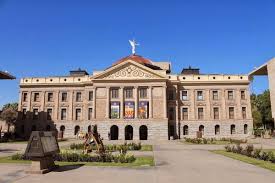
Arizona’s Legislative Session Still in the Hurry-Up-and-Wait Phase

Arizona’s legislative session is in its standard late-session opacity pattern. Budget talks are happening behind closed doors, and most other major work is waiting for the budget deal.

The players are the (R) House and Senate appropriations chairs (Montenegro & Petersen) along with Governor Hobbs.

Last week’s KJZZ’s recent interview with Capitol reporter Howard Fischer suggests a deal may be getting close.

This week at the Arizona Legislature: How close is a new budget deal?

Petersen told Howie that the parties are “probably 97% of the way” there. He also pointed out that Hobbs’ earlier revenue ideas, like gaming tax changes and voucher income limits, appear unlikely to survive, while the Legislature’s across-the-board cuts also appear less likely after Hobbs vetoed the earlier Republican budget plan.

There haven’t been any leaks that I know of about whether critical funding for hiring eligibility staff for AHCCCS and SNAP benefits is on the table. To me that’s the most important part of the budget.

Once the deal is released, things will probably move really fast. The House and Senate will likely vote on the budget package quickly. After that we can expect a “rapid fire” round of floor votes on bills that have been languishing for weeks.

Then there’s the ballot referrals. Unlike regular bills, legislatively proposed constitutional or statutory changes go straight to the ballot and can’t be vetoed. Once the budget is done legislative leaders will decide which of the roughly 30 proposed referrals get put on the floor for a final vote. If they pass, voters will see them on the 2026 ballot.

To be honest, Montenegro and Petersen have probably already decided which of the proposed ballot measures they’ll put on the calendar.

Potential 2026 Ballot Measures: A Public Health Perspective – AZ Public Health Association

One unresolved issue are agency director confirmations. It looks unlikely that there’ll be more director nomination hearings this year (there were none last week).

That could create a problem for keeping Debbie Johnston as acting ADHS director. Hobbs appointed Johnston in November, and like other agency heads, she needs Senate confirmation (her 1-year time clock ends on November 25, 2026, I think).

Maybe, just maybe, the governor will do a bit of brinksmanship & connect the budget deal to floor votes on her nominees.

By next Sunday I might be able to present a session hotwash…  but we’ll see.