Incarceration and COVID-19: Practice and Research Approaches to Combat COVID-19

A Free, Online Workshop

Thursday, April 21, 8:30 a.m.–noon

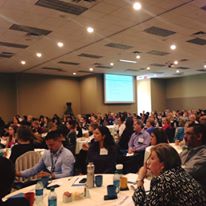
The Northern Arizona University Center for Health Equity Research, in collaboration with the COVID Prison Project and the Arizona Biomedical Research Centre, is offering this free workshop.

COVID-19 has had a high impact on correctional facilities (jails and prisons). This workshop will discuss the impact of COVID-19 on correctional facilities through a tribal, local, and national lens and discuss how different players and institutions have attempted to combat COVID-19 through practice and research.

Workshop: Incarceration and COVID-19 | Center for Health Equity Research

Speakers

Lauren Brinkley-Rubenstein, PhD

COVID Prison Project

Kathryn Nowotny, PhD

COVID Prison Project

Delores Greyeyes, PhD

Director, Navajo Department of Corrections

Captain Richard Martin

Yavapai County Sheriff’s Office

Beya Thayer, MSW

Yavapai County Sheriff’s Office

Moderators

Ricky Camplain, PhD

Carly Camplain, JD

Register now

Journal Article of the Week

Changes in Life Expectancy Between 2019 and 2021 in the U.S. and 19 Peer Countries

US life expectancy decreased by 0.40 years between 2020 & 2021, adding to an historic 1.87-year reduction in 2020. As in 2020, the decrease in US life expectancy in 2021 was highly racialized, but it followed a distinctly different pattern.

Hispanic and Black populations experienced disproportionately large decreases in life expectancy in 2020, life expectancy in the Hispanic population increased negligibly in 2021. Life expectancy in the Black population increased by 0.42 years in 2021.

The non-Hispanic White population experienced a further decline of 0.34 years, which occurred disproportionately among men likely resulting in part because of low vaccination rates among while males in the US.

47th Annual Arizona Rural Health Conference June 14 in Flag

For the past 47 years, the Arizona Center for Rural Health has hosted the Annual Arizona Rural Health Conference in collaboration with the Arizona Rural Health Association, making it one of the longest continually running rural health conferences in the United States.

The Arizona Rural Health Conference provides an environment for networking and dissemination of pertinent information among professionals and community members from rural Arizona and the Southwest. Register here.

After 4 Years, Community Health Worker Certification Rules Finally in Home Stretch

Community Health Workers are frontline public health workers who have a trusted relationship with the community and facilitate access to a variety of services and resources for community members. Building CHWs into the continuum of care has been proven to both improve health outcomes and reduce healthcare costs.

For a picture of how CHWs can fit into a continuum of care, take a look at this report from the NAU Center for Health Equity Research in collaboration with the UA Prevention Research Center (AzPRC) which provides insight into innovative strategies for integrating, sustaining and scaling of the CHW workforce within Medicaid (AHCCCS).

Building CHWs into the healthcare continuum requires that a certification process be in place. The public health community tried for many years to get such a process in place, finally meeting with success 4 years ago with the passage of HB 2324 (sponsored by Representative Carter), which charged the ADHS with implementing a program for the voluntary certification of Community Health Workers.

After 4 years of anticipation (and advocacy trying to get the ADHS to write the rules) the agency is finally adopting those rules.

Notice of Proposed Rulemaking is the Administrative Rules Webpage.

The scope of practice and the core competencies of certified community health workers;

  • Qualifications for certified community health workers;
  • Requirements for community health worker’s education and training programs;
  • Standards and requirements for continuing education courses;
  • Education, training, experience and other qualifications for trainers;
  • Criteria for granting, denying, suspending, and revoking a certificate; and
  • Certification application fees.

The draft rules are open for public comment through June 6.

There’s an oral proceeding on Wednesday, May 18, 2022 from 1:00 – 4:00pm. You can join by phone at (+1 240-617-0064 PIN: 659 165 829#). Questions go to Carin Watts, carin.watts@azdhs.gov

Incarceration and COVID-19: Practice and Research Approaches to Combat COVID-19

A Free, Online Workshop

Thursday, April 21, 8:30 a.m.–noon

The Northern Arizona University Center for Health Equity Research, in collaboration with the COVID Prison Project and the Arizona Biomedical Research Centre, is offering this free workshop.

COVID-19 has had a high impact on correctional facilities (jails and prisons). This workshop will discuss the impact of COVID-19 on correctional facilities through a tribal, local, and national lens and discuss how different players and institutions have attempted to combat COVID-19 through practice and research.

Workshop: Incarceration and COVID-19 | Center for Health Equity Research

Speakers

Lauren Brinkley-Rubenstein, PhD

COVID Prison Project

Kathryn Nowotny, PhD

COVID Prison Project

Delores Greyeyes, PhD

Director, Navajo Department of Corrections

Captain Richard Martin

Yavapai County Sheriff’s Office

Beya Thayer, MSW

Yavapai County Sheriff’s Office

Moderators

Ricky Camplain, PhD

Carly Camplain, JD

Register now

Secretary Becerra Extends Federal Public Health Emergency to mid-July

Here’s What it Does & Why It’s Important

U.S. Department of Health & Human Services Secretary Becerra just extended the federal public health emergency for another 90 days [See renewal declaration here], bringing the new expiration date to mid-July. It’s likely that the federal public health emergency will end at that time.

Many policy changes are tied to the federal public health emergency like flexibilities to waive or modify certain requirements in a range of areas, including in the Medicare, Medicaid, and CHIP (KidsCare) programs, mandates for private health insurance, authorization of medical countermeasures, telehealth, providing liability immunity to providers who administer services, and authorizing the FDA to do emergency use authorizations, among other things:

The public health emergency was initially declared by HHS Secretary Azar in late January 2020 under Section 319 of the Public Health Service Act. A PHE lasts for 90 days and must be renewed to continue. It has been renewed several times, most recently today. The new expiration date is July 16, 2022.

The Kaiser Family Foundation out together this good summary of what changes are coming when the federal declaration ends: What Happens When COVID-19 Emergency Declarations End? Implications for Coverage, Costs, and Access

Here are the sub-categories:

The thing I’m most immediately concerned about is that once the federal emergency ends on July 16, AHCCCS will begin its redetermination processes (redetermination has been suspended during the federal PH emergency since AHCCCS accepted the 6.2% enhancement in the federal share of Medicaid in AZ). AHCCCS estimates that as many as 500,000 members have moved in the last 2 years and didn’t update their address.

Once the federal emergency ends, they’ll send out notices to members and those that don’t reply in 10 days will get kicked off (at least I think it’s 10 days). If the letter goes to their old address they’ll obviously get kicked off.

There needs to be a full-court-press by AHCCCS, their contracted Managed Care Organizations, nonprofits and others to get the word out between now and July to make sure folks that have moved in the last year update their addresses at www.healthearizonaplus.gov or 1-855-432-7587.

50 State Survey Summary of Bills Limiting Public Health Emergency Authority

50 State Survey Summary of Bills Limiting Public Health Emergency Authority

Arizona isn’t the only state where bills have been proposed this legislative session that restrict public health emergency authority, prohibiting things like compulsory masking, vaccine policy, and restricting policy making by political jurisdictions, schools and the like.

The Network for Public Health Law produced a compendium this week that tracks the laws that have been introduced restricting executive authority and has followed them through the process – documenting where the bills are in the process.

In their report, you can find a table that details COVID-19-related legislation and broader proposed limitations on public health authority pending in all 50 states (including Arizona).

You can see that the list of harmful bills that were introduced in Arizona were pretty long, but only a couple of bills have survived this far. One has been signed (stopping political jurisdictions from closing businesses during a PH emergency).

A couple more are just waiting for final floor votes and a couple of other bad ones just need Rules Committee hearings and then a final floor vote.

  • SB1009 requires that as of Jan. 2021, the governor may issue an emergency proclamation for a public health emergency for no more than 30 days and may extend the order for additional 30-day periods, not to exceed 120 days, without passage of a concurrent legislative resolution. Just Waiting for House Floor Vote.
  • HB2107 prohibits the mayor of an incorporated city or town, and the chairman of the board of supervisors (BOS) for the unincorporated areas of the county, from ordering the closure of businesses during a declared emergency. Passed and Signed
  • HB2086 provides that COVID-19 vaccine and the HPV vaccine are not required for school attendance. Just Waiting for Senate Floor Vote
  • HB2471 requires that 14 days after a state of emergency is proclaimed, the governor must call for a special legislative session relating to the state of emergency. Passed House. Still needs Senate Rules Committee.
  • SB1567 prohibits state government and business affiliations from requiring any person to receive a COVID-19 vaccination or carry a COVID-19 immunity passport, discriminate against any person based on vaccination status, or enter into a contract, loan, or grant with an organization requiring COVID-19 vaccination. Provides an exemption for health care facilities. Passed Senate, still needs House Rules Committee/House Floor.

Weekly Legislative Session Roundup

Very little happened at the state capitol last week. The Senate met each day, but the agendas were super short. The House only gaveled in for two of their four workdays.  Word in the street is that this trend will continue while leadership continues to negotiate on the budget (even though there are many bills – good and bad- that remain in limbo).

The Rules Committees in both the House and Senate are both super-anemic, creating a bottleneck for many bills both good and bad. The 3rd Read (floor vote) calendars are so far basically blank for the week. That could change- but so far this looks like it’s going to be a snoozer. 

Rather than write up anything new this week, I’ll just refer you back to last week’s update- which still applies because of the lack of action last week. See last week’s summary: Legislative Action Roundup – AZ Public Health Association

Here’s this week’s tracker spreadsheet courtesy of our intern cohort (Danielle King, Garrett Tomlin, and Priscila Ruedas)