Hobbs to Use COVID Funds to Cancel Some Medical Debt as a Public Health Intervention

Governor Hobbs announced that she’s using $30M in COVID relief funds to purchase the medical debt of some Arizonans who earn less than 400% of the Federal Poverty Line or who owe more than 5% of their annual income to medical debt.

AZ Gov. Hobbs to erase medical debt for 1M using COVID relief funds

The state is contracting with RIP Medical Debt (a nonprofit) to identify and buy debt held by collection agencies, medical providers and hospitals using the COVID relief funds.

This kind of debt relief is actually an evidence-based public health intervention. A recent article in JAMA entitled: Associations of Medical Debt With Health Status, Premature Death, and Mortality in the US concluded that:

“In this cross-sectional study of 2943 US counties, a higher share of the population with medical debt was associated with more days of poor physical and mental health, more years of life lost, and higher mortality rates for all-cause and leading causes of death following a dose-response association.”

These findings suggest that medical debt is associated with worse population health and that policies increasing access to affordable health care, such as expanding health insurance coverage, may improve population health.”

Indeed, AZPHA supported the successful Predatory Debt Collection Protection Act which passed in November 2022 precisely because of the link between debt relief and improved health status.

Because medical debt can be bought for pennies on the dollar, the $30M in COVID relief funds has the potential to wipe out between 1.5B and 2B in existing medical debt.

It will probably take a little time for this to actually happen on the ground – but some relief is on the way.

Our Take: Vote YES On the ‘Predatory Debt Collection Protection Act’ – AZ Public Health Association (azpha.org)

Predatory Debt Collection Protection Initiative: Policy Paper

WIC Could Be Decimated by HCR2060

It’s no secret that the House & Senate majority are frustrated that Governor Hobbs has been vetoing some of their priority bills. As an end-around, they’re increasingly turning to things called ‘SCR’s and HCR’s’ – Resolutions that, if passed via each chamber, place the bill directly on the ballot during the next general election (the state constitution doesn’t allow the Governor to veto those Resolutions).

Last legislative session saw 4 potential laws that will be on the 2024 ballot including:

This year there are more than 60 Resolutions circulating at the legislature. There’s no way all of them will make it to the November ballot – but there are a few that probably will.

I’ll cover one of them that could have public health impacts here.

It’s HCR2060. The title says ‘lawful presence; e-verify program; penalties’. HCR passed on a party-line vote in the House and is now with the Senate. The flagship part of HCR 2060 requires employers in the state to ensure that new hires are legally eligible to work. It also would deny public welfare benefits to undocumented persons.

E-Verify is a tool developed by the federal government that can electronically confirm whether applicants for jobs are legally eligible to work in the U.S. There’s no national requirement for employers to use the system except that any entities who contract with the feds must use E-verify for all their staff.

It’s already mandatory for all employers in Arizona to use E-verify. So, there’s not a whole lot that’s new about employment verification in HCR2060.

The public health issue with HCR2060 is that state, county, and city agencies who provide anything that appears to be a ‘public welfare benefits’ must also use E-Verify to determine whether the person is actually eligible for the service or benefit – even though the E-verify system is set up to just check employment eligibility.

The Resolution defines a ‘Public Welfare Program’ as:

“… any program administered by a city or town that provides an individual with financial aid in the amount of at least $500 per year including benefits… including benefits that relate to health, disability, public or assisted housing, food assistance or unemployment.”

The federal government already has criteria for deciding eligibility for federal benefits like Medicaid (AHCCCS) and food stamps (SNAP) (it’s called Systematic Alien Verification for Entitlements).

HCR2060 would require AHCCCS & ADES (who administers SNAP) to use both SAVE (as they do now) AND E-Verify…  and the two systems will often (or at least sometimes) give different answers.

Some legal immigrants are eligible for federal benefit programs but ineligible to work (the Women Infant and Children – or WIC programs comes to mind). Many current WIC recipients qualify under SAVE but not under E-verify.

Arizona WIC insiders think about half of the 135,000 WIC participants would lose their services if voters ultimately approve HCR2060.

It’s also possible – even likely – that many other programs at the city or county level would get caught up in this new bureaucracy, requiring additional expensive administrative checking for a host of benefits.

Voters might vote down HCR2060 at the polls in November – but they might not – resulting in a cascade of bureaucratic red tape, confusing contradictions regarding benefit eligibility & the loss of critical services – especially WIC.

Studies suggest that every $1 spent on WIC results in up to a $3.13 reduction in spending for Medicaid programs. This is particularly pertinent given the large overlap between WIC and Medicaid recipients. Reductions in poor health outcomes because of nutrition aid programs such as WIC are also expected to save significant amounts in private healthcare as well.

Federal Funding for WIC & SNAP Saved at the Bell

WIC to Get a 16% Funding Increase

Congress needed to approve funding legislation by Friday to protect two critical public health programs – the Women Infant and Children program (WIC) and the Supplemental Nutrition Assistance Program – aka food stamps (SNAP).

They did so with just a few hours to spare before those two critical public health programs would have had a funding cliff.

Public health DC insiders expected it to be passed (in large part because WIC is associated with the larger USDA bill for farmers who have a powerful lobby). The feed bill, called the Consolidated Appropriations Act included funding for six of the 12 appropriation bills including WIC and SNAP.

Republicans got on board the funding package by insisting that the 20,000 veterans who’ve been deemed unable to manage their veterans’ affairs benefits can still have a gun (many with a serious mental illness). They also got funding cuts from the Department of Justice, the FBI and EPA.

Democrats were able to negotiate a 16% increase in WIC funding – going from $6B annually to $7B.

While the Bill includes the increased funding for WIC, it doesn’t include badly needed administrative reforms to WIC that are included in the separate (and languishing) H.R.8450 – Healthy Meals, Healthy Kids Act like:

  • Updating funding formulas to actually cover staffing and administrative costs;
  • Modernizing WIC benefits to include online shopping (easier participation); and
  • Evaluating effectiveness of telehealth for WIC visits (makes participation easier).

See Also: WIC in Jeopardy in AZ as Counties Consider Dropping the Program: Finances Making Running WIC Untenable

WIC is a federally funded program that supplies important nutritional services and support for eligible pregnant and postpartum individuals and their children until age 5. WIC uses nutritional education, breastfeeding support, nutrition help, and referrals to more services as mechanisms to improve the health of the low-income individuals it serves.

Family income needs to be below 185% of the federal poverty limit in order to qualify (slightly more generous than AZ’s Medicaid participation standard)

WIC money goes to states who further manage the overall program. ADHS mostly distributes the money to the county health departments and federally qualified health centers to implement WIC programming.

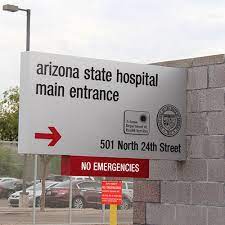
Senate Fails Key Arizona State Hospital Governance Reform Bill: State Hospital will (or may) Continue to be Run & ‘Regulated’ by ADHS

No hospital should regulate itself. Especially a hospital that helps patients with challenging psychiatric conditions that require the highest level of care.

But that’s exactly what’s been happening ever since 1974. The Arizona Department of Health Services has been both running & ‘regulating’ our Arizona State Hospital. That conflicted governance model has caused unchecked substandard care over the years when ADHS leadership soft-pedals regulatory oversight to give the appearance that the facilities are providing care that meets standards.

See: More oversight is needed at the Arizona State Hospital, critics say

For the last few years, Sen. David Gowan (R-Sierra Vista) has been proposing a simple fix that would eliminate the conflict of interest. This year’s bill is SB1688. Last week, the Arizona State Senate failed SB1688 by a vote of 13-15. Puzzlingly, all but two Democrats voted against the bill, ensuring it’s failure.

It would have established a 5-member Governing Board who would be responsible for hiring and managing the State Hospital Director. The state hospital would report to and serve at the pleasure of the Board and ASH would finally operate on its own, solving a longstanding governance problem created by the fact that ADHS both runs and regulates our state hospital.

Fixing the Governance Flaw at Our Arizona State Hospital: A Primer

But… in an unexpected turn of events, the bill was reconsidered by Sen. Theresa Hatathlie, D-Coal Mine, and now has a 2nd potential opportunity to pass out of the Senate Monday. With Hatathlie’s “Motion to Reconsider” and with the right amendment to bring additional Democrats who had voted NO (despite Gowan’s amendment with recommendations by the Governor’s office) it’s possible the bill will pass out of Senate on Monday and make its final passage through the House & up to the Governor’s desk.

Arizona State Hospital Needs Independent Oversight, Isn’t Getting It

If Monday’s effort to resurrect the bill fails, it appears that the hospital’s flawed and conflicted governance model will remain in perpetuity… or until a series of bad outcomes makes it crystal clear to everyone, including the Governor’s Office, that the current governance model is dangerous.

Fixing the Governance Flaw at Our Arizona State Hospital: A Primer

 If Monday’s effort to reconsider SB1688 fails, at least I can tell myself that I tried my best to correct the system. I’ll have a clear conscience…  I wonder if those who oppose SB1688 will?

For context read this article by Amy Silverman: Patient deaths at Arizona State Hospital raise questions about staffing levels, lack of oversight

This story by Mary Jo Pitzl at the Arizona Republic & Stephanie Innes’ investigative piece: More oversight is needed at the Arizona State Hospital, critics say

Federal Funding for WIC & SNAP Ends Friday: What You Need to Know

Congress needs to approve funding legislation by Friday to protect two critical public health programs – the Women Infant and Children program (WIC) and food stamps (SNAP). This Friday (March 8) is the expiration date for the Agriculture Appropriation part of the budget – and without action this week, WIC & SNAP funding will expire this Friday.

Fortunately, ADHS says they have enough encumbered funds to cover a funding gap for WIC even if the funding bill doesn’t pass this week. I haven’t heard whether ADES has patch funding for SNAP – but I’m assuming that they do.

Public health DC insiders expect that it’ll be passed (in large part because WIC is associated with the larger USDA bill for farmers who have a powerful lobby).

The feed bill, called the Consolidated Appropriations Act includes funding for six of the 12 appropriation bills including WIC and SNAP. While the Bill includes full continued funding at last year’s level for the WIC & SNAP, funding for other HHS programs (NIH, CDC, HRSA, SAMHSA) ends March 22. Legislative text proposing funding for these programs has not been released.

Sadly, the appropriation bill doesn’t include badly needed administrative reforms to WIC that are included in the separate (and languishing) H.R.8450 – Healthy Meals, Healthy Kids Act like:

  • Updating funding formulas to actually cover staffing and administrative costs;
  • Modernizing WIC benefits to include online shopping (easier participation); and
  • Evaluating effectiveness of telehealth for WIC visits (makes participation easier).
WIC in Jeopardy in AZ as Counties Consider Dropping the Program: Finances Making Running WIC Untenable

WIC is a federally funded program that supplies important nutritional services and support for eligible pregnant and postpartum individuals and their children until age 5. WIC uses nutritional education, breastfeeding support, nutrition help, and referrals to more services as mechanisms to improve the health of the low-income individuals it serves.

Family income needs to be below 185% of the federal poverty limit in order to qualify (slightly more generous than AZ’s Medicaid participation standard). WIC money goes to states who further manage the overall program. ADHS mostly distributes the money to the county health departments and federally qualified health centers to implement WIC programming.

AHCCCS is Building the Health Care Workforce: Here’s One Strategy

By 2030, Arizona will need more than 190,000 new direct care workers. Direct care workers provide long-term care and personal help to people who are elderly and individuals with disabilities and/or long-term conditions. They work in facilities and private homes, and help with daily tasks like bathing, dressing, cooking, and medication management. They promote independence and improve the quality of life for those they support.

Behavioral health care is another high demand need where graduates with a certificate or associate degree can enter the workforce and climb the health care career ladder.

Explore AZ Health Care Careers

The AZ Healthcare Careers platform helps students and job seekers connect! Build your profile, take a jobs skills assessment, and explore health care career opportunities. Search for entry-level positions that require minimal experience or training, like behavioral health technician or direct care worker. 

Career advancement and training pathways that will help you move up into in-demand positions like social and community service managers, health care social workers, registered nurses, or home health aides. Visit PipelineAZ’s blog to learn more.

See a list of health care degree and certificate programs eligible for the Home and Community Based Scholarships.

Scholarships at Maricopa Community College

Maricopa County Community College students who are pursuing health care careers in behavioral health and long-term health care services degree or certificate programs may be eligible for scholarships that cover tuition, books, course fees, health and safety requirements, and other needed resources.

Visit the Maricopa Community College AHCCCS Scholarship web page for eligibility requirements and to apply. Contact: AHCCCS-Scholarships@domail.maricopa.edu

Scholarships at Northland Pioneer College

At Northland Pioneer College, students in these health care programs may qualify for AHCCCS scholarships:

Visit the Northland Pioneer College AHCCCS Scholarships web page for eligibility requirements and to apply.

Scholarships at Eastern Arizona

Learn more about Eastern Arizona College Home and Community Based Scholarships. Contact: finaid@eac.edu

Scholarships at Mohave Community College

Learn more about the AHCCCS Home and Community Based Scholarships at Mohave Community College

Scholarships at Coconino Community College

Learn more about health-related scholarships at Coconino Community College. Contact: arp-cet.ahcccs@Coconino.edu

Scholarships at Arizona Western Community College

Learn more about the AHCCCS Home and Community Based Scholarships at Arizona Western Community College.

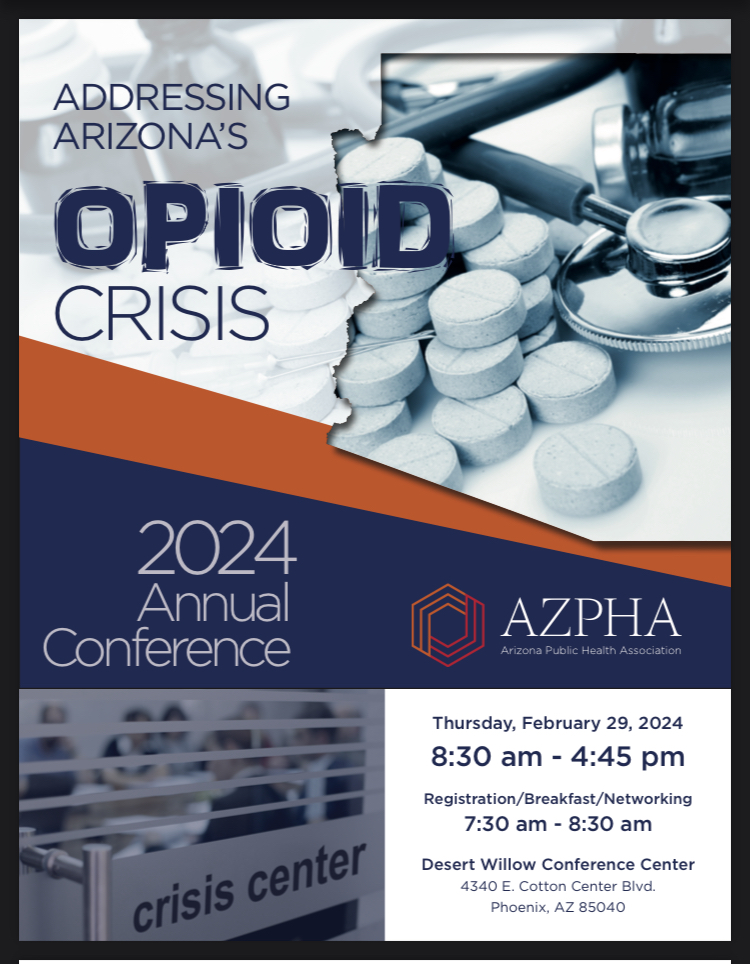
AzPHA 2024 Conference Materials: Addressing Arizona’s Opioid Epidemic

A huge thank you to all those who registered for Thursday’s sold-out 2024 Arizona Public Health Association Conference: Addressing Arizona’s Opioid Crisis. A special thank you to all of our sponsors and exhibitors for making our conference possible!

Overdoses from opioids and especially fentanyl continue to accelerate in Arizona. In fact, fentanyl poisoning is among the top 5 leading causes of death in Arizona. While the trajectory of the epidemic continues to be grim, evidence-based best practices to address the epidemic are advancing at the state, county and local level as well as numerous nonprofits. Funding from the OneArizona settlement is now and will continue to provide critical financial resources to help partners to implement these evidence-based practices now and in the coming years.

Our 2024 Arizona Public Health Association conference on Thursday brings together more than 40 experts and practitioners to share their research, intervention practices and results. Participants and attendees have a one-of-a-kind opportunity to share with each other data, best practices and evaluation techniques that will help them most effectively use settlement funds and best practice policies to assist with mitigating this troubling epidemic.

 Final Conference Brochure w Agenda

General Sessions:

General Session Presentations: AZPHA, ADHS Surveillance & AHCCCS Priorities

Breakout Sessions:

Access to Treatment for Incarcerated Individuals Experiencing Opioid Withdrawal in the Maricopa County Jail System

Addressing Opioids & Behavioral Health from a Federal Perspective

Assessment of Service Needs of People Who Use Drugs in Maricopa County: Findings & Recommendations

Bureau of EMS & Trauma System Naloxone Leave Behind Program

Collaborative Efforts in Rural Consortium of SUD/OUD Partners to Support Youth & Young Adults Along the US-Mexico Border

Data to Action: Opioid Surveillance, Fatality Review & Prevention Measures in State Public Health

From Stigma to Hope to Healing: A Shift in Perspective on Prenatal Substance Exposure

Maricopa County Public Health Fellowship: Catalyst for Change in Correctional Health Services

Perceptions of Overdose Risk Among Persons Who Use Illicitly Manufactured Fentanyl in Phoenix AZ

Public Health & Libraries Harm Reduction Partnership

Reducing Opioid Overdose in AZ through Medical & Pharmacy Practice Change

The Impact of Opioids on Maternal & Child Health & Strategies to Improve Outcomes

Using Overdose Data to Transform Care: What Data Matters?

A Tale of Two Cities An Overview of Opioid Use Prevention Initiatives in Phoenix, AZ and Kansas City, KS

Kids Care Expands to 225% of Federal Poverty Level Friday

AHCCCS received permission from CMS this week to expand Kids Care eligibility to 225% of the federal poverty level. The earlier eligibility cap had been 200%.

The initiative was funded in last year’s state budget (and last year’s SB1726) but AHCCCS still needed to ask permission from CMS to do the eligibility expansion.

Prior to sending this 1115 Waiver Amendment Request, AHCCCS sought CMS approval to expand KidsCare eligibility to 225% of FPL through a State Plan Amendment, but CMS said they needed to do an “1115 Waiver” instead. With the waiver now approved, AHCCCS is free to begin expanding eligibility.

Kids Care will now make it so kids whose parents make too much to qualify for Medicaid (more than 138% of poverty) but less than 225% of poverty can pay an affordable premium for quality Medicaid (AHCCCS) coverage.

Monthly premiums range from $10/month for families making between 138-150% of poverty to $50/mo for one kid and $70/month for more than one kid. KidsCare – Arizona’s Children’s Health Insurance Program

Gov. Katie Hobbs: Changes to Arizona Medicaid program will help families (azcentral.com)

Legislative Session Halftime Update

This year’s legislative session is just about 1/2 over. Well, maybe not chronologically, but in terms of bills’ migration through the process. The budget will probably be done at the tail end of the session.

This year we’re focusing our advocacy in two main areas: policy interventions to improve the performance of ADHS’ assurance and licensure responsibilities and behavioral health. 

Of course, we’re signed up for a whole bunch of bills, both for and against, but we’re focusing more on the assurance and licensure and behavioral health areas.

In part, that’s because we need to spend less time fighting against bills that are clearly bad for public health because we have confidence that the governor will veto bad bills (during the previous administration we had to do a lot of defense because the former governor had a proclivity to sign bills even if they were harmful to public health.

Most of the bills that would help ADHS do a better job regulating care facilities are on track and doing well including:

• HB2111 licensed facilities; transfer; sale; prohibition – Prohibits the ADHS from acting on an application for licensure of a currently licensed health care institution while any enforcement or court action related to their license is pending. Passed House.

• HB2249–residential care institutions; inspections – Adds behavioral health residential care facilities to the list of places for which ADHS can’t accept accreditation in lieu of a compliance inspection (eliminates deemed status). Passed House.

•HB2653– assisted living care; reporting; monitoring; injury – Greatly enhances incident reporting requirements for assisted living facilities and establishes optional electronic monitoring options (with limitations). Requires staffing registry checks. Passed House Health 8-0.

• HB2764– long-term care; enforcement; memory care – Raises the cap on ADHS imposed civil money penalties to $1000 per patient per day. Requires ADHS to develop a separate certification for assisted living facilities or nursing care institution that wants to provide enhanced memory acre services to residents. Passed House Health 9-0

• SB1655 – health care institutions; regulation – Increases the cap on civil penalties for violation of health care institution statutes from $500 to $10,000. Establishes the Indigenous Peoples Protection Revolving Fund with money from civil penalties. Passed Senate Health 7-0 but died in Rules

The same goes for the bills that would improve the performance of our behavioral health system. Most are on track, but a couple have stalled out:

– SB1678– secure state mental health facilities – Makes it clear that secure residential behavioral health facilities are only for people receiving court ordered treatment. Passed Senate Health 7-0.

– SB1688: Arizona State Hospital; governing board; governance. Establishes the State Hospital Governing Board and transfers operational control of the Arizona State Hospital to an independent 5-member board – eliminating the conflict of interest in which ADHS both runs and ‘regulates’ ASH. Passed Senate Health 7-0

– SB1309 Mental health evaluations; information &SB1311Mental health; data; evaluation

•SB1309Expands information that’s needed for court ordered behavioral health evaluations to include more information about the proposed patient. It also specifies which individuals may provide informed consent on behalf of a proposed patient for a voluntary evaluation (Passed Senate Health 7-0)

•SB1311 Makes it clear that AHCCCS is responsible for monitoring, overseeing and evaluating other state agencies that provide mental health services. It also makes good changes to the procedures for mental health prepetition screenings and court-ordered evaluations. (Passed Senate Health 7-0)

2024 Legislative Session Working Powerpoint working draft

Licensing & Regulating Care Facilities: A Root Cause Analysis of Arizona’s Failure to Protect Vulnerable Persons & Pathway to Redemption

Regulating facilities where Arizonans receive services is a key, one might say cornerstone, function of a state health department. When a state health department is doing a good job regulating facilities like nursing homes, assisted living centers, behavioral health facilities, outpatient treatment clinics and the like, journalists’ stories are generally about how a facility did poorly on an inspection and highlight agency enforcement actions.

It’s an altogether different story when an agency deprioritizes their assurance and licensure mission and journalists end up writing about how lax or even nonfeasant and agency becomes. When that happens, stories become not so much about noncompliant facilities, but about poor regulation and unchecked substandard care.

That’s precisely what happened toward the end of the Ducey Administration. On former Director Christ and Herrington’s watch, ADHS licensing programs continued to atrophy until the Arizona Auditor General exposed gross nonfeasance on the part of the agency.

See:

Following each of those reports, journalists weren’t writing about substandard facilities, but about substandard performance of the entire licensing and regulatory system.

That 2019 Arizona Auditor General Report found, among many other things, that ADHS (during the Director Christ/Herrington era) failed to investigate long-term care facility complaints. They even discovered Christ lowered the priority level of 98% of their open high priority nursing home complaints, giving the appearance they were making improvements (high risk complaints need to be done in 10 days vs months for the others).

A core reason why the agency failed the people of Arizona during the prior administration was its leadership (leadership which is now gone from state government). Among the reasons, perhaps THE CORE reason for their terrible performance was a hiring freeze that was imposed on ADHS by former Governor Ducey’s team.

Each agency received a ‘cap’ on the number of personnel they could have. That led agency directors (Christ/Herrington) to decide what jobs to fill and not fill as people retired or left the agency. A smart and ethical director would recognize that she or he should prioritize filling posts in clear core regulatory areas – like the positions responsible for regulating care facilities like nursing homes, assisted living centers and the like.

Sadly, filling those types of positions weren’t a priority for Christ or Herrington – and the agency became less and less effective at regulating care facilities over the course of time – resulting in the terrible outcomes identified in the Arizona Republic’s The Bitter End Series by Caitlin McGlade Melina Walling & Sahana Jayaraman: 

How The Arizona Republic reported on resident harm in senior living facilities
The Legislature Intervenes

The shocking Auditor General findings finally got the attention of the state legislature, and in 2022 they distributed an additional $1.6M for ADHS to hire licensing staff. Sadly (but not unexpectedly) Herrington failed to hire any staff with those funds.

House Committee on Abuse & Neglect of Vulnerable Adults Meets: Urges Policy & Operational Changes to Protect Vulnerable Adults

The attitude of the agency finally changed in early that things need to change with the departure of Herrington and the advent of the Hobbs administration.  Tom Salow, new chief of the Licensing Division, posted a blog that reflects a new attitude at the Agency committing to fix their problems rather than sweeping them under the rug as had occurred during the Ducey era.

See: A recent audit of the Long Term Care Licensing system shows room for improvement to address issues with complaint processing ADHS Blog

“There were significant changes to the ADHS Division of Licensing leadership team prior to the release of the 2022 Report. Our current leadership team agrees with the Auditor General that no excuses can justify the additional findings in the 2022 Report, and the failure to implement the recommendations from the 2019 Report. We recognize the importance of correcting these issues to help ensure the health and safety of the vulnerable populations that reside in Arizona’s LTC facilities.”

The Agency is now in the midst of a months-long effort to recruit, train and keep inspectors to fill the talent void left by the Christ and Herrington administrations – but the minimum qualifications are robust and the training time significant, and the process of filling badly needed positions hasn’t been fast.

In the meantime, legislators of both parties are acutely aware of the shortcomings of the department’s licensing performance (despite recent positive leadership changes and a culture that now embraces quality improvement rather than denying bad performance).

In this year’s budget, Governor Hobbs proposes to appropriate funds to add 16 employees to follow up on complaints, general inspections, and enforcement. However, even if those funds are appropriated, the Department would still need to increase their licensing fees to ensure a stable funding source for long-run success.

Legislators are rightfully frustrated by what they’re hearing from constituents and reading in the newspaper and are proposing several bills that would help the ADHS do a better job regulating institutions over the long run including:

  • HB2111 licensed facilities; transfer; sale; prohibition – Prohibits the ADHS from acting on an application for licensure of a currently licensed health care institution while any enforcement or court action related to their license is pending. Passed House Committees.
  • HB2249 – residential care institutions; inspections – Adds behavioral health residential care facilities to the list of places for which ADHS can’t accept accreditation in lieu of a compliance inspection (eliminates deemed status). Passed House 57-0.
  • HB2653 – assisted living care; reporting; monitoring; injury – Greatly enhances incident reporting requirements for assisted living facilities and establishes optional electronic monitoring options (with limitations). Requires staffing registry checks. Passed House Health 8-0.
  • HB2764 – long-term care; enforcement; memory care – Raises the cap on ADHS imposed civil money penalties to $1000 per patient per day. Requires ADHS to develop a separate certification for assisted living facilities or nursing care institution that wants to provide enhanced memory acre services to residents. Passed House Health 9-0
  • SB1655 – health care institutions; regulation – Increases the cap on civil penalties for violation of health care institution statutes from $500 to $10,000. Establishes the Indigenous Peoples Protection Revolving Fund with money from civil penalties. Passed Senate Health 7-0

But remember, even if all these new policy changes pass and are signed, real improvements will only come if ADHS continues to rapidly improve their processes and recruit, train, and retain inspectors. In short – they need to continue to dig out of the 8-year hole they were left by Christ & Herrington.