
Call for Presentations – AZPHA Conference – From Crisis to Care: Improving Outcomes in Arizona’s Behavioral Health System

Call for Presentations

AZPHA 2026 Conference
From Crisis to Care: Improving Outcomes in Arizona’s Behavioral Health System

Friday, May 1, 2026
Desert Willow Conference Center | Phoenix, Arizona

Conference Tracks & Topic Areas

The Arizona Public Health Association invites proposals for presentations at our 2026 Annual Conference, focused on improving care and treatment for people with mental and behavioral health needs in Arizona.

Many sessions will be grounded in Arizona’s Medicaid behavioral health system and its intersection with public health, housing, courts, and community-based care.

Track A: Policy, Advocacy, and Systems Change

Track B: Population-Specific Needs – Serious Mental Illness

Track C: Integrated Care and Community Well-Being

Track D: Crisis System, Court-Ordered Evaluation & Treatment

Track E: Maternal Mental Health & Perinatal Care

What We’re Looking For

We welcome proposals from public-health professionals, clinicians, policymakers, researchers, advocates, people with lived experience, and system leaders.

Priority will be given to sessions that are evidence-based, practice-focused, and relevant to Arizona.

Emphasis on practical, replicable approaches is encouraged. 

  • Sessions exploring how public policy, financing, informatics including the applications of artificial intelligence, and system design can improve and shape access to behavioral health care in Arizona. 
  • Presentations focused on care models and supports for people with serious mental illness, including permanent supportive housing, assertive community treatment, peer & family support, and transitions from institutional to community-based care
  • Sessions highlighting models that integrate behavioral health into primary care and community settings, including crisis-prevention strategies that reduce reliance on emergency departments and law enforcement.
  • Presentations addressing Arizona’s crisis response and civil commitment systems, including emergency response, stabilization, court-ordered evaluation and treatment, legal considerations, system bottlenecks, and opportunities for improved coordination.
  • Sessions focused on maternal mental health during pregnancy and the postpartum period, including screening, treatment, continuity of care, and Medicaid’s role in improving access and reducing disparities for birthing people and families.
Presentation proposals are due by Monday, February 9, 2026
  • One presenter per accepted session will receive free conference registration.
  • One additional presenter on the same session will be eligible for the discounted student registration rate.

Submit Your Proposal Here! 


AzPHA Condemns ICE/CBP Unchecked Violence

AzPHA Urges Senators Kelley & Gallego to Demand Accountability and Vote No on Continuing Current Homeland Security Funding Levels

The Arizona Public Health Association (AzPHA) exists to improve the health of all Arizonans through advocacy, education, and professional development.

As the unifying voice for public health in Arizona, we are compelled to speak when policies and practices threaten community trust, access to care, and the conditions necessary for people to live healthy lives.

AzPHA strongly condemns the indiscriminate and aggressive actions of Immigration and Customs Enforcement (ICE) and U.S. Customs and Border Protection (CBP) in Minnesota and across the United States. Reports of individuals being targeted, arrested, and detained based on perceived immigration status, appearance, or language spoken, without transparency or accountability, raise serious concerns about civil rights, due process, and the public health consequences of fear‑based enforcement practices.

Equally alarming are documented instances of excessive force, without accountability, and the suppression of peaceful protests in response to these actions. The use of intimidation, violence, and fear to silence civic engagement undermines public trust and inflicts lasting harm on individuals, families, and communities.

From a public health perspective, the presence and practices of ICE and CBP, when conducted without accountability or community safeguards, create environments of fear that directly undermine access to essential, life-saving care.

Consistent evidence shows that individuals living in communities impacted by ICE activities delay or forgo prenatal care, childhood immunizations, chronic disease management, and other critical health services. These disruptions threaten not only individual well-being, but the health and resilience of entire communities.

Particularly egregious are tactics that place children at the center of enforcement operations. Practices that expose children to trauma, family separation, or coercive tactics jeopardize their physical and emotional development and carry long‑term consequences for population health and educational outcomes.

Arizona’s diverse communities are central to its identity as a state. It is home to twenty-two federally recognized tribes; more than 30% of the population identifies as Hispanic or Latino; nearly 13% of residents were born outside of the United States; and more than one quarter of Arizona households speak a language other than English at home.

This rich diversity, central to Arizona’s identity, also makes our communities uniquely vulnerable to indiscriminate ICE practices that rely on appearance, language, or perceived identity to carry out violent and destabilizing enforcement actions.

The intentional, long-term work of public health and health care institutions to build trust and engage communities that have historically been marginalized or excluded is now being systematically undermined.

Fear-based immigration enforcement is reversing years of progress in preventive care, early intervention, and community engagement. When people are driven into the shadows, public health cannot fulfill its mission to protect and promote health for all.

AzPHA urges Senators Kelly and Gallego to use their authority in the U.S. Senate appropriations process to stop business-as-usual funding for ICE and CBP.
Specifically, we call on Senators Gallego and Kelly to withhold approval of funding for ICE or CBP unless and until strict, transparent, and enforceable accountability measures are enacted. 
This includes independent oversight, limits on the use of force, protections for children, meaningful consequences for violations of civil and human rights, independent agent accountability processes, greatly enhanced agent training, and more appropriate qualification criteria for CBP & ICE staff.
Additionally, AzPHA urges Arizona’s Senators to roll back ICE & CBP funding to Fiscal Year 2024 levels to limit capacity for the agencies to harm families, suppress free expression, and undermine civil liberties and public health.

Congressional funding decisions are among the most powerful tools available to protect community health, uphold human dignity, and restore trust. Arizona’s Senators must use that leverage now. Public health demands accountability.

AzPHA affirms that health equity, human dignity, and community safety are inseparable. We call for an immediate end to enforcement practices that criminalize identity, traumatize families, trample on civil liberties and obstruct access to care. Public health cannot thrive where fear is used as a governing tool.

See our letter to Senator Gallego
See our letter to Senator Kelly

Dr. Bill Foege: A Life That Changed the World

AZPHA mourns the passing of Dr. Bill Foege and gives thanks for a life of extraordinary service to public health. Very few people have made the world healthier and safer at global scale. Bill Foege did.

Dr. Foege’s career spanned decades of modern public health. Beginning as an officer in the CDC’s Epidemic Intelligence Service, he played a central leadership role in the global campaign in India that eradicated smallpox in the 1970s… one of the greatest public-health achievements in history.

His firsthand account of that effort, House on Fire is essential for anyone who wants to understand how evidence, strategy, and persistence can overcome even the deadliest threats.

In 1977, Dr. Foege was appointed Director of the CDC by President Carter. As CDC Director, he inspired staff and championed evidence-based, collaborative public-health policy. He showed that science accompanied by ethical and transparent leadership can earn public trust. He also co-founded co-found The Task Force for Global Health, which helped increase global childhood immunization coverage from roughly 20% to 80%, saving untold lives.

He was also a big player in the public health philanthropy. Dr. Foege also left a profound mark on the philanthropic landscape.

At a dinner in Seattle in the mid-1990s, Foege was seated next to Gates and explained the enormous leverage of public health to improve lives at scale. That conversation is widely credited as the moment that set the foundation on its global-health path.

Gates later recruited Foege to join the Bill & Melinda Gates Foundation as Senior Medical Advisor and senior fellow in global health where he helped shape the foundation’s global public health strategies. His insistence on vaccine equity and high-leverage global interventions was instrumental in shifting the foundation’s focus toward preventable deaths in low-income countries.

Dr. Foege served as President of the American Public Health Association in 1986. Those who collaborated with him consistently describe a leader who spoke, acted, and led with moral clarity something especially rare at the federal level these days.

Ironically, Foege passed away on the day the US abandoned their membership in the WHO – institution built on the same principles of international cooperation, shared responsibility, and evidence-based action that defined his life’s work.

Many of us were fortunate to meet Foege in real-life. He visited Arizona several times including spending time with county health officers at the Arizona Local Health Officers Association retreat in the 2010s. I also was able to meet him at a talk he gave at the UA Medical School in the early 2010s.

The world is better because Bill Foege showed what public health can achieve when evidence is paired with courage, ethics and morals.

His life is a reminder that showing up, building coalitions, and insisting on evidence can change the course of history.

We’ll miss his leadership and mentoring even as his legacy endures.

Dr Bill Foege: A life well-lived.

Arizona’s Measles Response in 2026 What Counties Are Doing

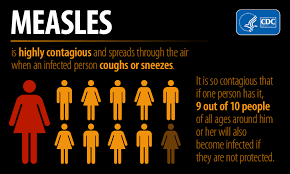
Arizona county health departments are now managing 5 different measles exposure investigations, with a dozen confirmed cases across 4 counties in the last 3 weeks including two new cases identified by Maricopa County on Friday.

Measles outbreaks used to be one-off events usually from international travel. But because of the accelerating anti-vax movement outbreak investigations have become the new normal for public health.

As of last Friday, Mohave County had reported eight cases, all connected to the Colorado City epidemic. Pinal County has two cases. Maricopa has 3 cases & Pima County one. County health staff have found exposures in public settings, triggering several time-sensitive containment efforts.

Behind the scenes, county public health teams are carrying out a host interventions to limit further spread of measles.

What county health departments are doing

When a measles case is confirmed, county health departments immediately shift into outbreak-control mode. Core response activities include:

  • Case investigation and verification, including symptom timelines, vaccination status, and infectious periods
  • Contact tracing, often involving dozens of potentially exposed individuals
  • Exposure notifications for people who may have been exposed in public places, health-care settings, schools, or childcare facilities
  • Assessment of immunity status among identified contacts to figure out who is protected and who is susceptible
  • Post-exposure prophylaxis, including MMR vaccination or immune globulin when appropriate and timely
  • Isolation of confirmed cases to prevent further transmission
  • Quarantine or activity restrictions for exposed, susceptible individuals during the incubation period
  • Coordination with health-care providers, schools, childcare centers, and neighboring jurisdictions (more on this later).

Schools and childcare: exclusion as a mitigation tool

When measles exposures involve schools or childcare settings, county health departments have more tools at their disposal.

Under Arizona’s communicable disease rules administered by ADHS (see the Communicable Disease Rules on Page 38), each of Arizona’s 15 county health officers has clear legal authority to:

  • Isolate confirmed cases
  • Quarantine exposed individuals
  • Exclude unvaccinated students or children from in-person attendance when necessary to control disease spread

Exclusion of unvaccinated and potentially exposed students from in person school can last more than a month because measles has a long incubation period and public health practice requires exclusion for two full incubation periods to ensure transmission has ended.

If a measles case occurs in a school or daycare, county staff will typically:

  • Review immunization records of classmates and peers
  • Find students who are unvaccinated or otherwise susceptible
  • Decide which students must be temporarily excluded from in-person instruction
  • Work with schools and families to clarify timelines, requirements for return, and options for remote learning where available

The New Normal

For the last few decades Arizona has only had sporadic measles cases, largely because vaccination coverage was high enough to prevent transmission. That protection is eroding and in some parts of the state gone.

The anti-vaccine movement is strong and increasingly organized, and public health departments will continue to be operating in an environment where measles outbreaks are routine.

County health departments will continue to respond professionally and aggressively to measles cases. But as vaccination rates continue to fall, these labor-intensive interventions (contact tracing, quarantine, and school exclusion) will become more common.

The 2027 State Budget: What Are Hobbs’ Budget Priorities?

Governor Hobbs released her proposed budget this week laying out her priorities around public health, health care access, food insecurity, and some broader social determinants that shape health outcomes in Arizona.

As is always the case, her budget proposal is a wish list rather than a final product. What ultimately emerges from the legislative process will depend less on the strength of the ideas than on the effectiveness of the governor’s team in negotiating with lawmakers.

Healthcare & Public Health (‘one-time’ General Fund)

  • *AHCCCS – $14.4 M ($4M Technology and $10.4 M to add 150 FTE)
  • *Medicaid Enterprise System (handles AHCCCS’ critical functions, including case management, billing, reconciliation, and provider payments) – $15.2 M Ongoing General Fund*
  • Critical Access Hospitals – $4.3 M*
  • Crisis Service Line – $4.0 M
  • Navigation Assistance for New Medicaid Requirements – $3.2 M
  • Medical Care Transfers (Rural Hospitals) – $500,000
  • AHCCCS Caseload and Capitation Rate Supplemental Funding for FY 2026 ($121.7 M) and FY 2027 (Estimated to cost $331.1 M)
  • AHCCCS Tobacco Tax Revenue Shortfall Resolution (Projected Shortfall is $ 42.7 M in FY2027)
  • Arizona State Hospital – $3.3 M
  • Arizona Psychiatric Access Line – $1.2 M

*These appropriations are critical for AHCCCS to be able to effectively implement the work requirements posed by HR1 while avoiding unfair disenrollment due to a bad computer system

Food Assistance

  • SNAP New Requirements $48.4 M (Work Requirements, Admin Costs, Error Rate Penalties) and add 146 FTE
  • School Meals Program – $3.8 M
  • Free and Reduced Lunch – $37 M
  • A to Z Portal – $2.2 M GF ongoing and $215,400 ongoing from the Temporary Assistance for Needy Families (TANF) Fund

Housing

  • Housing Acceleration Fund – $2.5 M GF One-Time and $2.5 M ARPA Arizona Affordability Fund
  • Utility Assistance – $15 M ARPA One-Time
  • Weatherization and Home Repair – $5.0 M ARPA One-Time
  • Geothermal Energy – $1.5 M from Air Quality Fee Fund and $1 M federal funds
  • Continued Funding for the Health and Housing Opportunities (H2O) Waiver Program

Early Childhood

  • DES Child Care Assistance – $44.8 M Ongoing GF
  • $128.1 M GF and $271.9 million Department Long Term Care System Fund expenditure authority in supplemental funding for FY2026
  • 298.8 M increase and $673 M in Department Long Term Care System Fund expenditure authority in FY 2027 for caseload adjustments
  • Of the GF expenditure authority part, $5.5 M and $15.2 M, one-time, respectively, are related to an expected increase in appeals.

_____________________

Legislative Update

Our Public Health Policy Committee continues to meet each Friday at 2pm to discuss our positions on bills and to strategize about how to weigh in on bills that are coming up in committee in the coming week. You can view the positions we’ve taken on various bills in our google tracker sheet which is located here: AZPHA Bill Tracking Spreadsheet 2026 – Google Sheets

I’ll cover the nuts-and-bolts next week. In the mean-time you can view this discussion which was posted last week: Legislative Session Begins: Our Positions So Far – AZ Public Health Association

U.S. Completely Withdraws from the World Health Organization: A Setback or a Blessing?

This week the US officially exited the World Health Organization, ending nearly 80 years of membership and financial support. The president has made it clear that the U.S. won’t resume payments or take part in WHO governance for the rest of his term.

Note: the Biden Administration pre-paid 2025 dues a couple of days before he left office – which is why the US official exit from WHO didn’t happen until this week.

At first this looks like a setback for global health. The US had been the largest contributor to WHO’s budget, and our exit triggered concern among some that the WHO’s ability to carry out its work effectively will be harmed because reduced funding (due to the US no longer paying dues). That raises concerns that disease surveillance, outbreak response, and vaccine coordination will weaken.

But, as I argued in my blog a year ago, there’s another way to look at it: losing U.S. influence during the next 3 years is, in fact, a good thing – as long as other countries step up and backfill the missing US dues.

Why? Because this US administration (e.g. Kennedy/Rubio) will no longer have influence on the WHO Executive Board and World Health Assembly – and will no longer be able to push politically driven and non-evidence-based WHO programming. That leaves the WHO free to focus on its core mission by protecting health with evidence and science without harmful interference by the US.

The US had been contributing 18% of WHO’s overall budget, initially creating a $760M funding gap in their 2-year budget. Thankfully, other countries and philanthropic organizations (e.g. Novo Nordisk Foundation) have stepped in to backfill the US former dues.

China has committed $500M and contributions from other countries total about $170M (e.g.  Switzerland $40M, Sweden $13M, Angola $8M, Qatar $6M). That brings global pledges to roughly $670M… 88% of the U.S. funding loss (once the checks arrive).

That leaves a shortfall of about $90M right now, around 2% of WHO’s total 2-year budget. In practical terms, that’s a modest reduction, and one WHO should be able to absorb by prioritizing higher impact projects and lowering or dropping low value or politically imposed initiatives.

A 2% cut is unlikely to damage WHO’s core functions. What matters most is how WHO chooses to distribute scarce resources. WHO now has the flexibility to end any program that had been pushed by the US in the last year and bring back programs that were effective and evidence-based that the US was discouraging (e.g. vaccination campaigns in developing nations).

WHO’s most critical work will remain intact. Disease surveillance and outbreak detection networks will continue to operate; mechanisms for vaccine quality assurance and prequalification will remain in place; and long-term disease control programs (polio, measles, malaria) will still have global support. These are the functions that matter most for health outcomes in low-income countries.

So, while the WHO may end up with a slightly smaller budget, they will also be less subject to harmful and politically driven interference by people like Kennedy and Rubio over the next 3 years.

For example, Kennedy will no longer be able to use the US’ former position on the WHO Executive Board to kill vaccination campaigns in developing nations and vaccine distribution work for polio eradication etc.

Indeed, the WHO is arguably in better shape now than it was last week because the Trump Administration no longer has influence at the WHO.

It’s entirely possible (even likely) that 3 years from now the US will rejoin the WHO under leadership that is again committed to science, multilateral cooperation, and improving health outcomes in developing nations.

When that happens, U.S. engagement could again strengthen global health security.

Until then, WHO will work with a slightly smaller budget but with fewer political constraints and may emerge more focused & effective.

SAMHSA Grants: Another Kennedy Whiplash

For years, Arizona’s substance-use system has relied on a Substance Abuse and Mental Health Services Administration (SAMHSA) Substance Abuse Prevention, Treatment, and Recovery Services Block Grant. Last year Arizona received $49M.

The SAMHSA grant is uniquely valuable because it fills gaps in the system and can pay for community interventions like naloxone which quickly reverses opioid poisonings and is used by fire, law enforcement, comm unity providers, social workers, and teachers.

It also pays for community-based prevention programs, substance-use treatment for uninsured and underinsured people, recovery supports, early interventions, services for pregnant women with substance-use disorders, and outreach to people at highest risk of overdose.

This week Kennedy created a bunch of drama as he abruptly nearly $1.9B in various grants to states. No warning. No transition plan. No explanation. Then, a few hours later, SAHMSA sent notices out saying never mind. We’re not cutting the grants after all. Note: certain block grants, 988 suicide and crisis lifeline funding and Certified Community Behavioral Health Clinics were spared from the initial cut notices.

AHCCCS, who is the recipient of Arizona’s SAMHSA block grant reports that their sizeable ($49M) Substance Use Prevention, Treatment, and Recovery Services Block Grant was not impacted by the sudden termination and (follow-up recission of that termination). However, for those two days, Arizona (various state entities and providers) had lost the State Pilot Program for Treatment of Pregnant and Parenting Women (PPW-PLT), the Partnership for Success grant and the STOP Act grant (substance use prevention), and Project AWARE (Advancing Wellness and Resiliency in Education), and special funding for naloxone.

Such is the state of governance and leadership at HHS these days.

With the Country Distracted, Kennedy Advances his Agenda to Undermine Vaccine Access

While our attention is understandably on the gross violations of civil liberties by ICE and a possible war with NATO over Greenland, Kennedy quietly laid more track to achieve his eventual goal of wholesale elimination of several vaccines this week. How?

Last week he expanded the CDC’s Advisory Committee on Immunization Practices (ACIP) – adding two new voting members, both of which have publicly stated that they are now anti-vaccine.

Up until now, ACIP has provided evidence-based guidance on vaccine recommendations that shape clinical practice and determines insurance coverage for immunizations in the US.

A few months ago Kennedy dismissed all members appointed under the previous administrations and began installing new appointees who are aligned with his anti-vaccine beliefs.

The new ACIP nearly removed COVID-19 vaccination from the adult immunization schedule which would have undermined universal coverage, but the committee chair broke a 6-6 tie to keep the vaccine on the schedule earlier this past year, thwarting his goal of eliminating the vaccine from the schedule except for people over 65.

Now that he sees he only has 6 sure anti-vax votes, Kennedy stacked the deck with these two new fervently anti-vaccine zealots:

Dr. Kimberly Biss, an obstetrician-gynecologist based in Florida, has a documented history of public criticism of vaccines. In a 2022 podcast interview, she explicitly stated that “prior to COVID I was not an anti-vaxxer, but I am now.” She also has said that she would not have her own grandchildren vaccinated and described the vaccine industry as “disgusting.”

Dr. Adam Urato, a maternal-fetal medicine specialist has frequently asserted that  vaccine safety is not “settled” and emphasizes (without evidence) that vaccines pose risks to pregnant women and fetuses. He’s also critical of allopathic medical interventions generally.

ACIP recommendations guide clinical practice and are hard wired to what health insurance needs to cover. If it’s not on schedule, insurers (including Medicaid via the VFC) don’t have to cover it.

The fact of the matter is that Kennedy has broad sweeping powers as Secretary and is enthusiastically using it to achieve his goal of elimination access to several vaccines. Because of the lack of checks and balances in Congress, I’m confident Kennedy will achieve his goal in 2026.

However, with the midterm elections in one year and a new presidential election in 2028 – a future administration will eventually reverse Kennedy’s damage. In the meantime there will be lasting damage to public health and lost lives.

Legislative Session Begins: Our Positions So Far

January 12 marked the beginning of the 2026 legislative session. 

AzPHA is following the session closely and expressing our support or opposition to bills based on a simple core principle…  we support bills that will have a positive impact on public health especially when they are evidence-based or evidence-informed.  We oppose bills that are likely to have a negative impact on public health. 

Our support or opposition to bills is located on the https://www.azleg.gov/ site under RTS Current Bill Positions. We have a host of Resolutions that also guide our advocacy which are posted on our website.

We encourage all AZPHA members to be enrolled in the legislature’s website where you can personally add your individual voice to our collective voice by expressing support (or oppostition)  to bills. Sadly, the legislature makes it kinda hard to get your user ID and login registered – in order to do it you need to physically go to the House or Senate computer kiosks to register in the system.

Our Public Health Policy Committee has a discussion board on Basecamp and that’s also where we post information, research and documents related to public health policy.  Let me know if you’d like to sign up for that Basecamp site at willhumble@azpha.org.

Our policy committee also has conference calls every Friday at 2pm starting on January 9 and usually lasting through the last Friday in February. The calendar in the policy committee basecamp has the URL for the zoom meetings.

Below are our positions on bills so far. You can read the actual bills by going to www.azleg.gov and typing in the bill number

2026 Legislative Session – Bill Positions
✅ Support

Health Care, Public Health, and Safety

  • HB2051 – AHCCCS; breastfeeding & lactation coverage
    Expands AHCCCS coverage for breastfeeding and lactation services in inpatient and outpatient settings.
  • HB2064 – Vulnerable pedestrians
    Strengthens protections for pedestrians to reduce injuries and fatalities.
  • HB2119 – Computer data centers; application deadline
    Reduces excessive tax incentives for data center construction.
  • HB2176 – Health facilities; licensure; complaints; investigations
    ADHS licensing reform addressing license swapping and improving enforcement transparency.
  • HB2177 – AHCCCS; waivers; American Indians; services
    Restores AHCCCS waiver authority to serve tribal members, reversing a 2010 policy change.
  • HB2178 – Agency chief medical officers; licensure
    Requires state agency CMOs to hold an Arizona MD or DO license.
  • HB2194 – Claims; prior authorization; denials; contact
    Requires insurers to clearly provide appeal contact information for denied claims and prior authorizations.
  • HB2195 – Nursing facilities; records; surveys; timelines
    Skilled nursing licensure reform improving oversight, timelines, and CMS alignment.
  • HB2214 – Special license plate; skin cancer prevention
    Creates a sun-safety specialty plate to fund skin-cancer prevention and education.
  • HB2224 – Produce incentive program; appropriation
    Recommends $2 million annually for produce incentive programs administered by ADES.
  • HB2228 – Elder abuse; registry; attorney general
    Improves accountability for reporting elder abuse to the Attorney General.
  • HB2233 – Rural health transformation monies; review
    Requires JLBC reporting on rural health transformation grant distribution and status.
  • HB2252 – Midwives; ambulances; home births
    Allows midwives to accompany patients during ambulance transfers if approved by EMS leadership.

Mental Health & Prevention (Senate)

  • SB1082 – Petting zoos; handwashing; supervision
    Establishes basic hygiene standards to reduce zoonotic disease risk.
  • SB1112 – Mental health; hearings; acquaintance witnesses
    Allows testimony from individuals with firsthand knowledge of concerning behavior in court-ordered evaluations.
  • SB1113 – Service of process; evaluation agencies
    Improves efficiency by allowing authorized evaluation agencies to serve documents.

Reproductive Health – Statute Alignment with Arizona Constitution (Support; no hearings expected)

  • SB1218 – Abortion; repeals
  • SB1219 – Unborn children; rights; privileges; repeal
  • SB1220 – Abortion; notarized consent; repeal
  • HB2649 – Unborn children; rights; privileges; repeal
  • HB2652 – Abortion; notarized consent; repeal
  • HB2653 – Abortion; repeals

_____________________

❌ Oppose

Vaccines, Infectious Disease, and Clinical Judgment

  • HB2005 / SB1194 – Vaccination status; denial
  • HB2007 – Ivermectin; over-the-counter
  • HB2086 – Vaccination mandates; masks; prohibition
  • HB2248 – Medical interventions; prohibition

SNAP, WIC, and Social Supports

  • HB2107 – SNAP benefits; purchases; waiver
  • HB2148 – Noncustodial federal monies; appropriation
  • HB2206 – SNAP; error rate; forensic audit

Reproductive & Gender-Affirming Care

  • HB2085 – Gender transitions; minors
  • HB2154 – Abortions; public funding; prohibition
  • HB2061 – Health care services; patient rights

Public Health Infrastructure & Safety

  • HB2059 – Highway speed restrictions
  • SB1011 – Medical examiners; sudden infant death
  • SB1016 – Religious exemption; medical products
  • SB1019 – Public water systems; fluoride; prohibition
  • SB1051 – Hospitals; patient immigration status; reporting
  • SB1070 – “Trump Derangement Syndrome”; research; report
Silent / Monitoring
  • HB2081 – Medical marijuana; terminal illness
  • HB2222 – Birth certificates; sex designation change
  • HB2244 – Evictions; satisfaction of judgments
  • HB2325 – Single-family homes; institutional investors
  • HB2396 – SNAP; allowed purchases
  • SB1052 – Assisted living; hyperbaric oxygen therapy
  • SB1073 – Speed limits; bicycles; sidewalks; paths
  • SB1115 – AHCCCS; remote work