
Arizona Takes a Step Toward Digital Birth Certificates

Arizona has become the first state in the country to issue and accept a Digital Birth Credential (for Arizona-born people).

If you were born in Arizona like me and show up at an MVD office without your certified birth certificate, you can use your phone to verify your birth record and get a secure digital credential through the EssentialID system that lets you also get the REAL ID from the driver’s license place.

The digital certificate can then be used at MVD as proof of identity. A certified (paper) birth certificate is mailed to you afterward.

This isn’t a universal digital birth certificate that you can use everywhere. But it’s an important first step toward making vital records more portable.

You can learn more about how it works at EssentialIDHelp.com.

Kudos to the ADHS Bureau of Vital Records for helping make this happen, along with ADOT’s Motor Vehicle Division and their technology partners.

Note: Since May 7, 2025, TSA has required adults 18 and older flying domestically to present either a REAL ID-compliant driver license/ID or another acceptable ID, such as a passport, Global Entry card, NEXUS card, or SENTRI card.


Child Safety in Arizona: Should DCS Be Both Customer & Regulator?

Arizona’s foster group homes need some checks and balances

A disturbing Associated Press investigation this week raises an important question that goes beyond the political controversy surrounding Sunshine Residential Homes:

Should the same state agency that desperately needs group-home beds also be responsible for licensing and regulating the companies that provide them?

The Arizona Department of Child Safety contracts with companies like Sunshine to house children in state custody. DCS decides what services it needs, pays the providers and depends on those companies to have beds available when kids need someplace to go.

But DCS also licenses and regulates those same companies through its Office of Licensing and Regulation.

It makes me wonder if there are enough checks and balances in  the system. I think not.

The Jakob Blodgett Case

The problem becomes clearer when you look at the tragic death of 9-year-old Jakob Blodgett. Jakob had Type 1 diabetes and died in 2022 after missing two doses of long-acting insulin while living in a Sunshine group home.

According to the AP investigation, DCS later issued Sunshine a licensing violation related to Jakob’s care. But DCS didn’t suspend or revoke the company’s license. Instead, it required policy changes.

A DCS licensing official later testified that the workers caring directly for Jakob should have been trained in managing his diabetes and recognizing diabetic ketoacidosis. She acknowledged that DCS hadn’t checked to make sure every staff member had the proper training.

Here’s the rub. DCS badly needs Sunshine’s beds.

The Attorney General’s investigation into a separate controversy involving Sunshine concluded that the company had “outsized leverage” because DCS depended so heavily on its group-home capacity.

Checks & Balances Matter

Imagine being the agency responsible for finding a bed tonight for a child who has nowhere else to go. At the same time, you’re supposed to be the tough regulator who might suspend the license of one of your largest providers and take dozens of beds out of circulation.

That’s a recipe for a potential bad regulatory decision.

The Legislature should consider moving health-and-safety licensing and regulation of these residential group homes to the ADHS while leaving DCS responsible for placement decisions, contracts, payment and making sure contractors provide the services DCS is buying.

The payer can focus on buying the services people need. The regulator can focus on whether the facility is safe, without worrying about whether enforcing the rules will leave the purchasing agency short of beds.

The agency buying the beds shouldn’t also be the only agency deciding whether those beds are safe.

Pima County’s Public Health Lens on Arizona’s Data Center Boom

Data centers are descending on Arizona, and the debate about them usually focuses on electricity (and electrical bills), water, and sometimes economic development. And sometimes health.

The Pima County Health Department recently got ahead of the data center siting curve by working with researchers from the Johns Hopkins School of Public Health to develop a Data Center Public Health Review that gives their Board of supervisors and city officials a way to look at data-center proposals through a public-health lens.

The team reviewed the available research and looked at how the building, construction, operation and decommissioning of data centers impacts community health (or could impact).

What Did They Look At?

The framework includes 21 different pathways where a data center could affect a community. Those include:

  • air pollution and construction dust;
  • diesel backup generators;
  • pollution from power plants supplying the electricity;
  • water use and wastewater;
  • noise and traffic;
  • waste heat and the urban heat-island effect;
  • nighttime light;
  • land use and loss of green space;
  • grid reliability;
  • electronic waste, batteries & other materials when a facility closes; and
  • economic burden and social vulnerability.

PCDH then looked at Pima County’s existing health conditions like asthma, cardiovascular disease, heat illness, Valley Fever, poverty, food insecurity, urban heat and other measures of vulnerability.

There Are Still Some Unknowns

The report is not a formal Health Impact Assessment and doesn’t claim that living near a data center causes particular diseases. In fact, one of its biggest findings is how little direct research exists on the health of people who actually live near data centers.

Most of the available evidence measures or models things like air pollution, noise, heat and water use rather than directly measuring health outcomes in nearby residents.

There are also important questions that can’t be answered until the details of a specific project are known. Electricity rates are a good example.

Pima County appropriately includes household financial energy burden in their assessment. Low-income households in Pima County already spend about 15% of their income on energy costs. Higher utility bills make families choose between electricity, food, medicine and rent.

But whether a data center actually makes that problem worse depends partly on who pays for the new electrical infrastructure needed to serve it.

If a utility needs new generating capacity because a giant data center arrives, the data center should pay the full freight for the generating capacity to service their centers.

Residential customers (especially low-income families) shouldn’t subsidize or pay for the capital costs for the power plants, transmission or anything that’s needed to serve a corporate data center.

If they do – the whole equation changes as the data center then has a large impact on the social determinants of health for the entire community as people pay more for electricity to subsidize the data center infrastructure.

For utilities like APS and Tucson Electric Power, which means the Arizona Corporation Commission is a critical part of the public-health equation. The Commission approves utility rates and decides how costs are distributed among customers.

If the Corp Comm has the backs for residential ratepayers and forces utilities to prove residents aren’t paying for the generating capacity for the data centers then rates shouldn’t rise because the center will bear those costs in their rates.

Kris Mayes calls for no new AI data centers as AZ faces water, power crunch

Sadly, the ACC has shown that they’re way more beholden to moneyed interests (and corporate campaign donors either indirectly or indirectly) than to actual voters and residential ratepayers, but that’s a conversation for another blog.

A Playbook for the Other 14 Counties

That’s why I’d encourage Arizona’s other 14 county health departments to spend some time with Pima County’s report.

You don’t need a data-center proposal sitting on the Board of Supervisors agenda before getting involved.

Use Pima’s framework. Look at your county’s baseline health and environmental data. Find vulnerable neighborhoods. Understand where the water and electricity would come from. Figure out what information you would need from a developer.

Then explain those issues to your supervisors before the big economic-development decisions get made.

Pima County didn’t conclude that data centers are good or bad for public health. They figured out what questions government should ask before saying yes.

Utility-Scale Solar & Storage: Separating Public Health Fact from Fiction

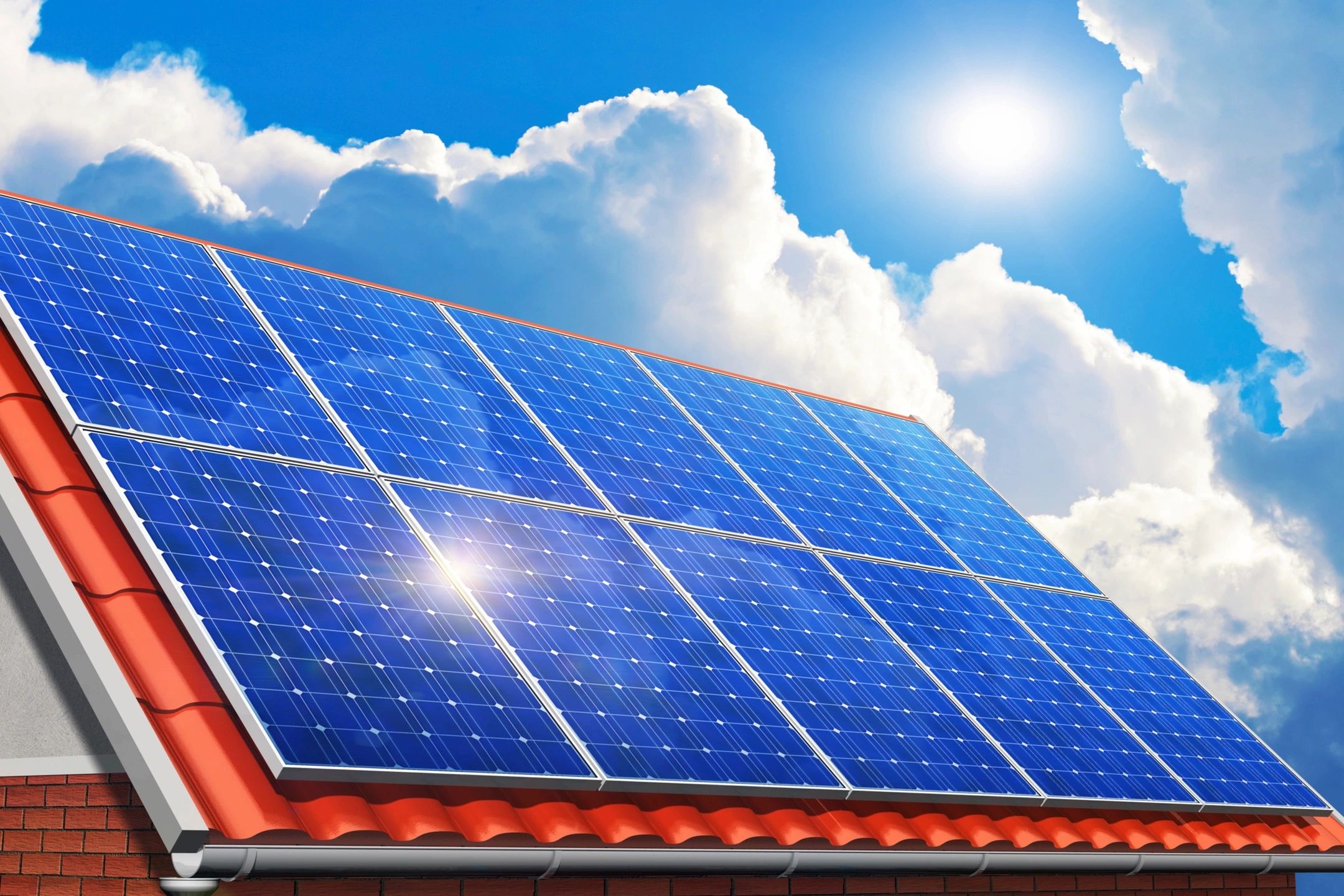
Utility-scale solar projects are popping up all over Arizona. Why? Because solar is often the least expensive option for generating more badly needed electricity.

That’s good for several public health reasons. Cheaper energy generation means (or at least should mean) lower electricity costs, which helps the social determinants of health, especially for lower-income households. 

It’s also a lot cleaner than fossil fuel generation and doesn’t emit combustion air pollutants. 

Yet… there’s a movement afoot by some to discourage solar generation. Some come from legitimate (but mostly unfounded) concerns about environmental and health issues. 

A lot of it though comes from folks who just don’t like renewable energy for ideological and political reasons that have nothing to do with the evidence. It’s pretty hard, if not impossible, to convince the ideological crowd that solar is a cheap and safe source of generation. 

But many folks just have questions and are confused because of misinformation coming from opponents.

So let’s dig into some of the misinformation that’s being used to discourage and fight utility-scale solar projects from an environmental and health lens.

Like every type of energy infrastructure, utility-scale solar and battery storage have impacts. Projects need to be properly located, responsibly designed and subject to reasonable operating, fire-safety and decommissioning requirements. Same goes for the battery storage that increasingly goes with solar projects.

But many of the public health arguments being tossed around against solar and storage don’t hold up when you look at the evidence.

Reliability & Battery Storage

One of the buzz words I often hear from the anti-solar crowd is that solar isn’t reliable because the sun doesn’t shine at night, and that the solution for smoothing out the load (battery storage) is bad or dangerous.

Grid systems always have balanced resources that turn on and off, plants that unexpectedly fail, and electricity demand that change by the day of the week, weather and time of day.

Battery storage now makes balancing easier.

A battery doesn’t generate electricity… it just moves electricity through time. Utility-scale batteries can charge during the middle of the day when solar production is robust and send that electricity back onto the grid during the late afternoon and evening when solar production is falling but electricity demand is still high.

That’s especially useful in Arizona. Our summer electricity demand doesn’t disappear when the sun goes down. Air conditioners keep running well into the evening.

Four-hour battery systems are increasingly used for exactly this purpose. Batteries can also react extremely quickly to changing grid conditions, helping operators regulate frequency and match electricity supply with demand on a second-by-second basis.

And this isn’t some experimental technology. By the middle of 2026 the U.S. already had nearly 52 GW of utility-scale battery storage operating on the grid, with Arizona among the states adding the most new battery capacity.

Solar and storage are still just parts of an overall energy mix. But pairing the two makes solar considerably more useful to grid operators by smoothing short-term fluctuations and moving inexpensive daytime electricity into the hours when it’s needed most.

What About Battery Fires?

Battery fires are a legitimate safety issue and shouldn’t be dismissed but managed with state of the art engineering.

Modern utility-scale projects should follow standards such as NFPA 855 and UL 9540/9540A, which address installation, fire and explosion risks and testing for thermal runaway. 

Projects should also have site-specific hazard analyses, emergency-response plans, proper separation between battery units and coordination and training with local firefighters.

In other words, regulate the actual risk. When battery storage meets these standards the risk of a bad battery event is negligible. That’s why siting of utility-scale solar and storage should include the fire safety standards above, reasonable setbacks, and decommissioning. 

Those issues should be addressed through proper siting requirements, enforceable operating and safety standards, emergency planning and a strong decommissioning plan.

Water and Solar

Let’s turn to water, because this one is especially important in Arizona.

Photovoltaic solar uses remarkably little water because it doesn’t need to boil water and cool steam-driven power plants like methane, coal and nuclear plants do.

In fact, solar, storage and wind are the least water-intensive electricity sources. By far.

Solar PV uses about 20 gallons of water per megawatt-hour. Methane generators use about 300 gallons per megawatt-hour. Coal uses 500 gallons and a hefty 720 gallons per megawatt-hour for nuclear power.

So solar uses less than 10% of what a methane (natural gas) generator uses!

Land Use

There are legitimate land-use issues too. Putting thousands of acres of anything in the wrong place can damage wildlife habitat or eliminate productive agricultural land. That’s an argument for good siting, not for pretending that solar development is inherently destructive.

The U.S. Department of Energy is studying “agrivoltaics,” where solar panels share land with crops, livestock or pollinator habitat. More than 4,000 MW of U.S. solar capacity already includes sheep grazing underneath the panels.

Research underway right here in Arizona is examining whether solar shade can reduce irrigation needs and heat stress for crops.

Again, land use is an important consideration that local officials can and should consider as they make siting decisions, but those decisions should be made with a clear head and use evidence rather than emotions to make siting decisions.

Property Values

Some people say large scale solar projects might have on property values. Here’s the evidence on that front:

A large Lawrence Berkeley National Laboratory study found a small average reduction (about 1.5%) for homes within ½ mile of large utility-scale solar projects with storage, but no measurable effect beyond 1 mile.

So landscaping, setbacks and thoughtful siting do matter and should be considered and taken seriously and incorporated into siting plans. 

Air Quality

Operating solar facilities don’t produce air pollution. Construction and disturbed soil can create dust, which should be addressed through siting, construction and maintenance requirements, but there are no actual emissions like there are with all combustion plants like methane and coal.

Those fossil-fuel power plants release nitrogen oxides, sulfur dioxide, particulate pollution and other pollutants. They contribute to asthma episodes, heart attacks, strokes, respiratory illness and premature deaths.

Solar panels don’t have smokestacks. Fossil plants do.

Soil & Groundwater

Then there’s the less common claim that solar panels leach toxic chemicals into the soil and groundwater if they are damaged by hail, lightning, weather events or sabotage. 

Photovoltaic solar panels are encapsulated and protected from the environment, so these are unfounded concerns. Panels do, however, eventually wear out or become less efficient after a couple of decades and need to be properly recycled or disposed of, and federal hazardous-waste requirements can apply.

That’s a legitimate planning issue, and when utility-scale solar facilities are sited, decommissioning and replacement should be included in the project plan.

Summary

Moving from fossil fuels toward renewable electricity is a public-health and health-equity strategy because fossil-fuel pollution and climate change disproportionately harm vulnerable communities.

So let’s properly manage utility-scale solar and battery-storage projects. Require responsible siting. Protect sensitive habitat. Manage drainage and dust. Require enforceable recycling and decommissioning plans. Use sensible setbacks, landscaping and modern fire and safety standards.

But policymakers should regulate actual risks based on evidence, rather than reacting to scary claims that don’t survive much scrutiny.

AZPHA Fact Sheets:

Arizona Needs More Electricity: Affordable, Reliable Electricity Is Public Health Infrastructure

Arizona Needs More Electricity: Electricity Rates Are a Public Health Issue

Arizona Needs More Electricity: Don’t Get in the Way of Building More Solar 

References

  1. Lazard, 2026 Levelized Cost of Energy+ — Finds renewable generation remains among the most cost-competitive new-build generation options on an unsubsidized basis.
  2. Trout Unlimited, Southwest Water-Energy Overview: Arizona — Compares water requirements of Arizona electricity sources, including approximately 20 gallons/MWh for solar PV, 300 for natural gas, 500 for coal and 720 for nuclear.
  3. U.S. EPA, Solar Panel Frequent Questions — Discusses panel composition, encapsulation, leaching and hazardous-waste requirements for discarded panels.
  4. U.S. Department of Energy, Solar Energy and Storage Basics — Explains how storage absorbs solar electricity when generation is high and returns it to the grid when demand is higher, including after sunset.
  5. U.S. Energy Information Administration, Battery Storage Capacity Averaged 70% Growth Over the Last Three Years — Reports nearly 52 GW of U.S. utility-scale battery capacity by June 2026.
  6. U.S. Energy Information Administration, New U.S. Electric Generating Capacity Expected to Reach a Record High in 2026 — Reports major 2026 battery additions nationally, including substantial planned capacity in Arizona.
  7. U.S. Department of Energy, Energy Storage Safety Strategic Plan — Reviews NFPA 855, UL 9540, UL 9540A and other standards governing battery-storage safety.
  8. U.S. Department of Energy, Farmer’s Guide to Going Solar — Discusses agrivoltaics and more than 4,000 MW of U.S. solar capacity incorporating sheep grazing.
  9. Lawrence Berkeley National Laboratory, Shedding Light on Large-Scale Solar Impacts — Examines more than 1.8 million home transactions and property-value effects near large-scale solar projects.
  10. U.S. EPA, Learn About Energy and Its Impact on the Environment — Reviews differences in air pollution and environmental effects among electricity sources.
  11. American Public Health Association, Climate Change, Health and Equity — Supports transitioning from fossil fuels toward non-combustion renewable energy as a health and health-equity strategy.

September AZPHA Coffee & Conversations: ‘Defending Democracy in the 2026 Midterms – How Arizonans Can Take Action’

September AZPHA Coffee & Conversations
‘Defending Democracy in the 2026 Midterms:
How Arizonans Can Take Action’
Friday, September 25 | 9am AZ Time (Noon ET) |
Register Here

For the first time in modern American history, the machinery of the federal government — which is meant to serve the people and protect the democratic process — is being turned against our elections. This webinar, presented by Protect Democracy, will explore how Arizona is positioned squarely in the crosshairs.

This unprecedented power builds upon the subversion strategies developed in 2022 and 2024: deceive voters about the trustworthiness of election systems, disrupt the operation of those systems and use the ensuing chaos to deny election outcomes they don’t like.

Explore analysis from Protect Democracy on the threats to the 2026 midterms in Arizona and strategies to address them. We’ll break down the “Deceive, Disrupt, Deny” framework currently being used to subvert the 2026 election cycle, with a specific look at how these tactics are playing out on the ground in Arizona, and explore the specific actions the public health sector can take to help stop them.

This session will go beyond the national picture to cover the specific threats facing Arizona’s elections and concrete, specific actions Arizonans can take to get involved and protect the vote in their own communities. None of us can do everything, but all of us can do something. We hope you join us for this important conversation.

Register for the Webinar

Double Check Your Voter Registration Status

Double Check Your Voter Registration Status

Take a minute to make sure your registration, address, and information are up to date so you’re ready to vote this election season.

Voting is one of the ways we have a say in the decisions that shape the health and well-being of our families and communities. Making sure we’re registered and ready to take part is a simple but important first step- and as healthcare professionals, we can help make that information easier for others to access, too.

Through Vot-ER, healthcare professionals can access free, nonpartisan tools to connect patients and communities with trusted voter registration and election information:

  1. Order your free Vot-ER badge, to easily connect patients and families with voter registration and election information.
  2. Already have a badge? Wear it! A simple QR code can give patients and families an easy way to check their registration or get the voting information they need.

Our first step today is simple: make sure we’re ready to vote. From there, we can help make it a little easier for the patients and communities we serve to be ready, too.

Help Spread the Word: New AHCCCS Tool Helps Members Prepare for Medicaid Work Requirements

AHCCCS has rolled out a useful new website to help Medicaid members figure out whether the new federal work and community engagement requirements are likely to apply to them when the requirements begin next year.

The site is Keep My AHCCCShttps://keepmyahcccs.com/

One of the best features is under the “Learn Whether Medicaid Work Requirements Apply to Me” tab. Members answer a series of simple checkbox questions about their circumstances, and the tool provides an assessment at the end telling them whether the new requirements are likely to apply.

Medicaid changes could affect more than 400,000 Arizonans

I ran through it several times pretending to be people in different circumstances. It’s easy to use and does a pretty good job explaining who is likely to be subject to the requirements and who may qualify for an exemption.

For people who will need to meet the requirements, the site also includes information about ways to comply—including links to opportunities to volunteer, which can count toward the community engagement requirement.

Here’s where our public health, healthcare and nonprofit networks can help spread the word. Many AHCCCS members probably won’t know this tool exists unless someone tells them about it.

The site also emphasizes something that applies to every AHCCCS member: make sure AHCCCS has your current address, phone number and email address so you don’t miss important notices.

Members can update their information through Health-e-Arizona Plus: https://www.healthearizonaplus.gov/

They can also:

If your organization serves AHCCCS members, please pass these links through your networks. A little advance preparation could prevent a lot of confusion and potentially prevent people from unnecessarily losing coverage.

State Attorney’s General Cram Public Health Protections Down Meta’s Throat

For years, much of public health’s response to the well-documented mental health harm caused by social media among kids has been to tell parents to watch their kids more closely and tell them to spend less time on their phones.

What we really needed were policy and regulatory changes aimed at the products themselves… especially the algorithms Meta and Tick Tock use to keep kids scrolling to sell more ads and make more money.

A recent study of more than 32,000 adolescents found that about one-third had encountered self-harm content online during the previous month. Among kids who saw it, the most common way it reached them was through algorithmic recommendations—not because they went looking for it.

Another recent study examining actual Instagram and TikTok feeds found that engagement-driven algorithms can create feedback loops, repeatedly serving young people content based on what captures their attention or reflects their emotional state.

That’s why the new multistate settlement with Meta last week has the potential to be an important public health intervention.

And make no mistake: the changes Meta agreed to weren’t voluntary. They were crammed down Zuckerberg’s by state attorneys general and their staff.

The settlement agreement includes Arizona and revolves around the things Meta has done within Facebook and Instagram (mostly Instagram) by intentionally using addictive features and knowingly exposing kids to serious mental health harm…  and lying to the public about the safety of its products.

Of course, Meta admits no wrongdoing in the settlement agreement (eyeroll), but they did sign off on some potentially positive public health interventions.

For users under 18, Meta agreed to a default two-hour combined daily limit on Facebook and Instagram, some interruptions during prolonged use, blocking most use from midnight to 6 a.m., fewer notifications overnight & during school hours, hidden ‘like’ and reaction counts, restrictions on cosmetic-procedure filters (not sure what that is), a way to verify age for users and some basic (undefined) protections from harmful content.

That’s good public health policy.

But Don’t Celebrate too Much

Thankfully the settlement sets up an independent auditor with access to relevant raw data, internal documents, communications, systems and personnel. If the auditor finds material weaknesses, Meta is supposed to develop and implement a corrective-action plan.

Without enforcement from the auditor all these interventions become suggestions to Meta – not actual requirements.

The attorney’s general can also go back to court if Meta violates it (assuming the court approves the agreement). Sadly, but not surprisingly, Meta’s lawyers built in some loopholes.

Parents (or clever kids who know how to simulate their parents) can avoid some of the algorithm changes which won’t be picked up by auditors. Some of the restrictions I have above have exceptions.

The big loophole is that Meta can replace certain safety tools with alternatives it “reasonably” expects to work at least as well. And, if a design replacement later performs worse, that alone doesn’t automatically put Meta in breach of the agreement.

There also isn’t a simple automatic fine every time Meta gets caught out of compliance. Enforcement depends on auditors finding problems, attorneys general pursuing them and courts acting.

So don’t expect Meta to suddenly care about mental health. Expect it to test the boundaries of the agreement and get away with whatever they can that makes them money.

But… the settlement gets a core public health principle right:

Change the environment. Change the defaults. Measure whether it works and most importantly, make sure there is a talented and independent auditor examining Meta’s compliance with the agreement.

Upstream Public Health Policy: Pima County’s Eviction Prevention Program

There’s an old public health principle: an ounce of prevention is worth a pound of cure. OK… maybe that’s not exactly a public health mantra, but you know what I mean.

Pima County has been proactively putting that principle to work for five years with its Emergency Eviction Legal Services program (EELS), and the results are promising.

More recently, the County has expanded that prevention approach through a much broader initiative called One Pima.

The two efforts are related, but they’re not the same thing. EELS is designed to prevent and respond to evictions.

One Pima is a broader public safety and homelessness-prevention initiative that includes housing aid along with addiction services, jail reentry work and cleanup of public spaces.

Let’s start with EELS.

Intervening When an Eviction Is Filed

Emergency Eviction Legal Services started in 2021 after the Board of Supervisors directed federal COVID relief money to help tenants facing eviction. But what began as an emergency response has evolved into a pretty effective prevention system.

When an eviction case is filed in Pima County Justice Court (which by the way in Arizona can happen if the tenant is just 5 days late on rent), the County gets with the tenant and lets them know how they can get help.

Their EELS team then connects them with a trained navigator.

The navigator can explain the process and decide whether the tenant qualifies for free legal help. They often also connect tenants with rent assistance, help with rehousing and plug them into employment services through the County’s One-Stop system.

Before EELS, less than 1% of tenants in Pima County eviction cases were represented by an attorney (meanwhile landlords almost always have access to a lawyer).

By FY2022–23, EELS had served 6,000 households since its launch. That year alone, navigators helped 2,953 households, 809 received free legal services and 287 received full representation. About half of those fully represented tenants had a good outcome — dismissal, settlement or judgment for the tenant.

In FY2022–23, EELS provided rental help to 1,748 landlords who agreed to pause the eviction process, preventing those evictions from moving forward.

For families who couldn’t avoid eviction, the County provided emergency bridge housing with case management, housing counseling, food, health care and other services.

In FY2025–26, EELS provided legal services to 432 households, hastened rent help for 651 households, and bridge housing and case management for 107 households.

Represented tenants achieved a favorable court result 54% of the time, while 94% of households leaving bridge housing went to a positive housing destination.

One Pima: Taking the Prevention Idea Broader

Separate from EELS — but based on much the same idea of intervening before problems become more expensive and harder to solve, Pima County launched the One Pima Initiative in November 2025.

County touts eight months of housing, public safety effort

One Pima is a two-year public health and safety initiative focused more broadly on housing instability, homelessness, addiction, jail reentry and public spaces. Housing prevention is a big part of it.

Through One Pima and the County’s broader housing work, more than 3,300 households received housing-stability and homelessness-prevention services in FY2025–26.

The County also completed 486 units of gap-funded affordable housing and is launching a Homeless Prevention Hub, backed by a two-year, $2M Garcia Family Foundation grant, which will give residents a single-entry point for rent assistance, utility help and other housing services.

So while EELS catches people when an eviction case lands in court, One Pima goes upstream to find and solve housing instability before somebody gets to that point in the first place.

Rather than waiting until somebody is sleeping on the street and then asking how we’re going to fix homelessness, Pima County is building systems that intervene earlier — when the rent is overdue, when the eviction notice arrives, or increasingly, before the housing crisis reaches either point.

That’s good public policy and good public health.

Kudos to the Pima County Board of Supervisors, Community & Workforce Development staff, the Justice Court, Constables and the community partners who have built and sustained this work.

P.S. A broader – more universal intervention would be to completely overhaul and modernize the antiquated Arizona Residential Landlord and Tenant Act. Passed in 1972 – and hardly revised since – it tilts heavily toward landlords fueling easy evictions, homelessness, and heat deaths.

More in this blog: Evictions, Homelessness & Heat Related Deaths: Is Arizona’s Antiquated Landlord & Tenant Act Part of Our Problem? – AZ Public Health Association

More information

Pima County Emergency Eviction Legal Services (EELS)

EELS Year 1 Report — FY2021–22

EELS Year 2 Report — FY2022–23

One Pima Initiative FY2025–26 Year-End Summary