
How Arizona’s Lawsuit Saved Millions in Public Health Infrastructure: States that Didn’t Sue Got Walloped

Earlier this year, Kennedy canceled nearly 700 CDC grants across the country. Those grants, worth about $11B for local public health, have deliverables focusing on things like vaccination programs, reducing health gaps between groups, updating old systems to track diseases, and hiring community health workers.

At first, the cuts hit both red and blue states about the same. But then, attorneys general and governors in about two dozen states with Democratic Attorney’s General (including Arizona) took the federal government to court.

Judges blocked many of the cuts via injunctions (so far), and the results between states that sued and those that didn’t are huge. States that joined the lawsuits (like AZ) got back almost all of their CDC money (80%).  States that didn’t sue got back less than 5%.

The federal government wanted to cut 17 CDC grants in Arizona, worth more than $239 million. Because Attorney General Kris Mayes joined the lawsuit, Arizona county health departments kept nearly all of that funding (so far) – losing just one grant.

That’s especially important because CDC money makes up more than half of what local health departments rely on to do their work.

These lawsuits are still working their way through the courts and a final decision on the legality of Kennedy’s cuts is yet to be determined. But, for the time being Arizona is receiving help from having a talented Attorney General interested in doing what she can to protect Arizona’s public health infrastructure.

Read more: Blue States That Sued Kept Most CDC Grants, While Red States Feel Brunt of Trump Clawbacks – KFF Health News

Kennedy’s Assault on Evidence-based Public Health Policy Intensifies: Fires CDC Director

Kennedy fired Susan Monarez as the Director of CDC last week barely a month after she was narrowly confirmed by the Senate. She was reportedly given the chance to quit. When she refused, she was fired.

According to multiple reports both in the media and among my contacts at the CDC – Monarez had an acrimonious meeting with Kennedy early in the week.

In that DC meeting, Monarez disagreed with Kennedy’s decision to dismiss all the members of the Advisory Committee for Immunization Practices and replacing them with several anti-vaccine activists.

My sources tell me she also clashed with Kennedy about her response to the murder of a CDC employee when the Atlanta campus was sprayed with gunfire a couple of weeks ago. Monarez let some staff temporarily work from home and spoke openly about trauma and recovery in an all-staff meeting. Kennedy admonished her for her response to the shooting. Her response was well-received by rank-and-file CDC staff.

Four senior leaders at CDC quit in response to the firing: Debra Houry, Demetre Daskalakis, Daniel Jernigan, and Jen Layden. They all warned that political interference and misinformation now threaten the evidence-based foundation of public health in the U.S.

Behind the scenes, Kennedy is preparing to release a September “report” trying to tie vaccines to autism, despite decades of evidence disproving that claim. In a cabinet meeting last week, he said he’ll follow the report with “aggressive interventions”.

While he didn’t say what that means, it likely will drive big changes to the recommended childhood vaccine schedule (dropping vaccines) and perhaps even delicensing some vaccines. Perhaps Monarez pushed back on that in the meeting this week. I don’t know that, but it makes sense.

The next CDC director will almost certainly be chosen for political loyalty, not expertise or commitment to evidence-based public health policy. If Kennedy actually selects a credentialed professional, that person will likely be the type of person more interested in keeping the job than actually doing the job.

Update: Kennedy has appointed a guy named Jim O’Neill as acting Director. O’Neill holds only degrees in the humanities and lacks any professional training in medicine, public health, epidemiology, or the life sciences.

His career path includes stints as a biotech investor, a speechwriter during the Bush administration, and an aide within HHS; none of which prepare him to manage disease surveillance, guide scientific research, or oversee complex health emergencies.

He advocates a “post-market” approach to drug approvals, suggesting drugs be licensed after brief safety trials, with efficacy determined only later. He has even suggested people should be able to buy and sell organs as a means to increase supply.

Under U.S. law (42 U.S.C. § 242c), the CDC Director must be appointed by the President with Senate confirmation, and is tasked with directing all disease prevention efforts, setting policy, supervising operations, and coordinating with internal divisions to protect public health both domestically and globally. O’Neill’s experience doesn’t match these requirements and responsibilities.

Building Hope in Santa Cruz County: The Story Behind the SOSA Consortium

In 2019, the Santa Cruz County Overcoming Substance Addiction (SOSA) Consortium was created to address the growing impact of substance use disorder (SUD) and opioid use disorder (OUD) in this rural border community. Led by Mariposa Community Health Center and supported by the Health Resources and Services Administration (HRSA) Rural Communities Opioid Response Program, the initiative began as a planning effort to create a coordinated network of care.

Today, SOSA has become a cornerstone of community collaboration—bringing together healthcare providers, behavioral health professionals, first responders, educators, law enforcement, and local organizations to prevent overdose, expand access to treatment, and reduce the stigma of addiction.

SOSA’s work has transformed systems and lives across Santa Cruz County. Through a series of targeted initiatives, the Consortium created new pathways and access to care and empowered the community to respond more compassionately and effectively to substance use.

Key successes include:

  • The launch of sosaheal.org, a community information hub with access to local services, treatment referrals, and prevention resources.
  • A Treat & Refer program with EMS, allowing individuals who experience an overdose to be connected immediately to a peer support specialist and treatment options.
  • Naloxone (Narcan) training is now widely available, including at local smoke shops and bars as well as embedded in First Aid and CPR training through the Fire Department and EMS.
  • The Nogales Police Department CARES program, where officers can connect individuals with SUD directly to peer navigators and real-time treatment support.
  • Expanded community access to recovery groups such as AA and NA, including regular meetings at a local faith-based shelter.
  • Ongoing youth prevention programs, offering education around substance use, mental health, and building healthy coping skills across generations.
  • Stronger coordination between medical and behavioral health providers, increasing warm handoffs to Medication Assisted Treatment (MAT) and re-entry services for justice-involved individuals.

SOSA includes individuals with lived experience—as well as their family members, caregivers, and friends—in planning, decision-making, and outreach. Their insights and advocacy help shape programs that are relevant, respectful, and responsive.

By putting people with lived experience at the center, SOSA is helping change the narrative—from blame to understanding, from isolation to community.

To meet the increasing demand for services, the Consortium has helped grow the rural public health workforce by adding peer support specialists, case managers, psychiatric providers, and behavioral health professionals.

To conduct these significant public health wins, the Consortium includes more than 30 individuals and 12 lead partners:

  • Mariposa Community Health Center
  • HOPE Inc.
  • SEAHEC
  • Nogales Police Department
  • Rio Rico Fire & Medical Department
  • Pinal Hispanic Council
  • Circles of Peace
  • Santa Cruz County Justice Court
  • Santa Cruz County Sheriff’s Office
  • Santa Cruz County Superintendent’s Office
  • Crossroads Nogales Mission
  • University of Arizona Prevention Research Center

Together, they continue to share resources, coordinate care, and drive innovation to ensure every community member can access the help they need—when they need it.

For those studying public health or considering a career in the field, rural communities offer both challenge and reward. In Santa Cruz County, public health work is personal.

The impact is visible, and relationships are deep. You are not just improving systems—you are walking alongside your neighbors, creating real change in real time. Rural public health also teaches flexibility, creativity, and collaboration across sectors. Every effort counts, and every person matters.

With persistence, partnership, and purpose, the SOSA Consortium is helping transform how rural communities respond to addiction—not just in Santa Cruz County, but as a model for others nationwide.

These public health heroes are reducing stigma, increasing access, and rebuilding lives—one connection at a time.

For more information, visit sosaheal.org.

Southern Arizona Partnership Shows the Power of Collaboration in Tackling Hypertension

Hypertension remains a leading preventable cause of years of life lost in the US. Preventable, because high blood pressure goes unrecognized or undertreated leaving people at risk for heart disease, stroke, and other preventable complications.

A new study published in the American Journal of Public Health highlights how safety-net providers like community health centers and local health departments in Southern Arizona are teaming up to better recognize and treat hypertension.

The article highlights an innovative partnership led by El Rio Community Health Center in Tucson, alongside other federally qualified health centers and three county health departments including Pima County (who coauthored the publication).

Formed in 2023, the collaboration is showing what’s possible when primary care and public health collaborate using evidence-based practices.

By combining the clinical expertise of FQHCs with the surveillance, communication, and policy functions of local health departments, the partnership has amplified efforts to reduce the burden of hypertension.

They’re sharing best practices among clinicians, expanding community education and awareness, strengthening referrals to primary care, and aligning public health strategies to address the root causes of disease.

Reference:

American Journal of Public Health. (2025). “Building Regional Partnerships Between Community Health Centers and Local Health Departments to Address Hypertension in Southern Arizona.” https://ajph.aphapublications.org/doi/abs/10.2105/AJPH.2025.308196

Mohave County Working Hard to Contain Measles Outbreak in Colorado City

The measles virus found some fertile ground to flourish up in Colorado City, AZ.

Why is it fertile ground?

Because the childhood immunization rates in that community are astonishingly low (well below herd immunity levels) so it’ll be super easy for the virus to infect new susceptible kids.

Note: Only 7.7% of kindergarten students at Colorado City’s Cottonwood Elementary have had the MMR vaccine. Only 40% of kindergarten students at Masada Charter School are vaccinated.

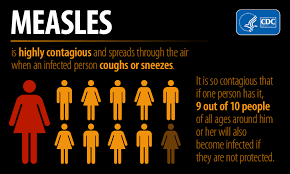
What started with one case a couple of weeks ago has now grown to at least 9 cases. Measles spreads super easy via coughing, sneezing, or even just being in the same room as someone who is infected.

An Arizona town is at the center of a budding measles outbreak | Phoenix New Times

The Mohave County Department of Public Health, led by Health Director Melissa Palmer, and her team have been “all hands on deck” to slow this outbreak.

Their team is working long hours to find people who may have been exposed, help infected people voluntarily isolate so they don’t spread it further, supporting families who need to stay home in voluntary quarantine, and encouraging families to choose to vaccinate their kids before they too become infected(vaccines are readily available at the Creek Valley Health Clinic).

Mohave County also held a vaccine event in the community Friday that vaccinated over 80 children and adults. Director Palmer reports good communication with the residents, and their nursing manager and Palmer will be meeting with the school board on Monday.

This outbreak is especially hard to manage because of two big challenges.

First, vaccination rates in Colorado City are very low. Many (probably most) kids there have not received the MMR vaccine, which is the best protection we have against the disease.

Second, most kids in the community are homeschooled through the state’s ESA voucher program. In most outbreaks, health departments can use school records to quickly find which children are vaccinated and which are not. In Colorado City, that tool isn’t available.

Instead, public health staff have to do “retail contact tracing” like finding and talking with families one at a time. That takes a lot of time and effort.

One factor working in the community’s favor is that so many kids are homeschooled via ESA vouchers – and there are likely to be fewer large scale school exposures than in other towns.

Note: There are 476 ESA recipients among 783 houses in Colorado City’s ZIP code

But… other types of community gatherings can spread the virus fast like church services and activities, 4H activities, playdates, birthday parties and family visits.

The good news is that if health officials find exposed people fast enough, they can sometimes stop measles. But that requires cooperation from the community.

For example, if someone who isn’t vaccinated gets the MMR shot within 72 hours after being exposed it can protect them or at least make the illness less severe.

This outbreak is a reminder that measles isn’t a problem from the past. It’s now in the present and will remain so until immunization rates improve to levels they were 15 years ago.

Mohave County’s public health team deserves a lot of credit for stepping up at showtime… but this will be a challenging outbreak to deal with especially if there’s little community cooperation.

AzPHA’s Letter of Support for ADHS’ Rulemaking to Increase Licensing Fees for Healthcare Institutions

August 22, 2025

Via Electronic Submission

Thomas Salow, Assistant Director
Public Health Licensing
Arizona Department of Health Services
150 N. 18th Ave., Suite 500
Phoenix, AZ 85007

Stacie Gravito, Office Chief
Administrative Counsel and Rules, Director’s Office
Arizona Department of Health Services
50 N. 18th Ave., Suite 200
Phoenix, AZ 85007

Re: Notice of Proposed Rulemaking for Title 9, Chapter 10, Health Care Institutions: Licensing

Dear Mr. Salow and Ms. Gravito,

On behalf of the Arizona Public Health Association (AzPHA), I am writing in support of the Department’s Notice of Proposed Rulemaking to increase licensing fees for health care institutions.

AzPHA agrees with ADHS that by leaving fees unchanged since January 2010 (when I began my tenure as Director), the Department has not had the necessary financial resources to fulfill its licensing and oversight duties.

For more than 15 years, the revenue generated from health care institution licensing fees has been inadequate to support the staffing, oversight, and enforcement functions that protect the health and safety of patients and residents.

Indeed, when I was Director and we set the licensing fees in 2009–2010, we neglected to include agency indirect in the fee calculation. That omission meant the fees were insufficient even then, and the gap has only widened over the past 15 years.

The revenue shortfall has been unsustainable for nearly a decade, and AzPHA has consistently urged the Department to increase its licensing fees since 2017. Sadly, Directors Cara Christ and Don Herrington ignored our pleas.

These proposed fee increases will allow the licensing division to maintain adequate staffing levels, accommodate inflation and rising technological costs, and prepare for future legal & legislative demands.

Without these changes, the Department’s ability to meet compliance and enforcement responsibilities will continue to erode, impairing financial stability and lead to unaddressed neglect of some of Arizona’s most vulnerable residents.

The consequences of underfunding licensing have been severe. Multiple reports by the Arizona Auditor General from 2019 through 2022 documented gross underperformance by the Department in responding to complaints and inspecting skilled nursing and other care facilities.

Faced with insufficient resources (or because former Director Christ & Assistant Director Colby Bower were unwilling to concede that the Auditor General found gross shortcomings in the Department’s performance), Christ & Bower chose to reclassify more than 95% of high-risk complaints as “low risk,” allowing the agency to delay investigations by up to a year, an indefensible decision that contributed to tragic and lethal outcomes for vulnerable Arizonans.

While those choices were largely the result of unethical leadership decisions during the Ducey Administration, it’s also clear that inadequate funding contributed to the Department’s failures.

AzPHA also commends the Department for preparing an objective and thorough economic impact evaluation as part of this rulemaking. By assessing the financial implications for providers and the Department, ADHS has provided stakeholders with clear, evidence-based justification for these fee adjustments.

This is precisely the kind of data-driven approach AzPHA has long urged the Department to adopt. Since 2017, we consistently advocated both higher fees and transparent economic analyses to prove their necessity.

The fact that ADHS has now conducted such an evaluation reflects a welcome shift toward evidence-based decision-making and accountability… actions that will strengthen both the agency and the public’s trust over time.

This rulemaking will finally provide the financial resources necessary for ADHS to meet its licensing responsibilities. While adequate funding cannot by itself ensure that future administrations will always prioritize health and safety, it does provide the Department with the means to do so.

Importantly, AzPHA now has confidence in the Department’s current leadership. With Mr. Salow as Assistant Director for Licensing and Interim Director Sheila Sjolander on board, we are now assured that the agency has ethical and talented leaders who are committed to restoring public trust and improving agency performance.

We applaud ADHS leadership for advancing this rulemaking and for your commitment to correcting the licensing division’s deficient performance during the Ducey administration.

These fee increases are not only long overdue, but also absolutely essential, and AzPHA strongly supports their adoption.

Sincerely,


Will Humble, MPH
Executive Director, Arizona Public Health Association
Director, Arizona Department of Health Services (2009–2015)

See ADHS’ Proposed Rulemaking – HCI Licensing Fees

Best for Who? Looking Beyond U.S. News ‘Best Hospitals’ Ranking

When U.S. News & World Report released its annual list of “Best Hospitals” last week Mayo Clinic Arizona once again topped the state rankings.

U.S. News Announces 2025-2026 Best Hospitals | Press Room | U.S. News

Before you draw conclusions that they’re really the best – let’s explore what these rankings actually measure and what they don’t.

U.S. News uses a scoring system that focuses on high-end specialty care. Hospitals are rated on their performance in 16 high-end medical & surgical specialties (e.g. cancer, heart surgery, neurology) and in 21 specific technical procedures. They also survey board-certified physicians to assess hospitals’ reputation in complex specialty care.

That might sound comprehensive, but it misses the mark when it comes to public health, especially low-income and Medicaid populations.

Here’s why:

  • Access to Care Isn’t Considered: U.S. News doesn’t measure whether low-income patients can actually get an appointment or whether they accept Medicaid members.
  • Medicaid & Safety-Net Care Aren’t Measured: The rankings don’t ask how many Medicaid patients a hospital serves, or how much charity care it provides (if any).
  • Specialty Procedure Weighting: By putting the most emphasis on advanced specialty services, the rankings favor referral centers like Mayo that primarily serve patients with Medicare or private insurance.
  • ·Patient Mix Matters: Safety-net hospitals (like Valleywise Health) care for poorer and sicker patients with fewer resources.

That’s why it’s so important not to confuse the U.S. News rankings with measures of actual public health & overall community benefit.

In other words. if your question is: “Which hospital provides the best high end specialty care for patients with comprehensive private health insurance” then the rankings give you an answer.

But if you want to know which hospitals do the most for public health and Arizona’s behavioral health and underserved communities, the US News and World Report is the wrong metric.

Note: Mayo Clinic in Arizona only accepts Medicaid coverage for transplant services and only if AHCCCS pre-authorizes the procedure.

To look at public health and community benefit you’d need to look toward hospitals that focus on underserved populations with the greatest health burdens like Valleywise Health does.

From the Diane & Bruce Halle Arizona Burn Center to its extensive behavioral health programs, Valleywise stands out as the backbone of our safety-net healthcare system, providing the kinds of services like inpatient and outpatient psychiatric care and first episode centers that other hospitals aren’t interested in providing.

And that’s exactly why Proposition 409 on the Maricopa County ballot this fall is so critical. It’ll provide much-needed investment in Valleywise Health facilities, ensuring continued care for those who need it most, including those struggling with serious mental illness, and providing the kind of care that really builds community benefit.

It’s fine to recognize excellence in high end specialty care for people with gold plated health insurance, I have no problem with that…  but let’s keep our focus on what matters most for public health – robust and accessible primary and acute care and services like inpatient and outpatient mental health care and other safety net services.

How ‘Crime-Free Lease Addendums’ Fuel Homelessness & Heat Deaths

More and more landlords in AZ have been requiring tenants to sign “crime-free lease addendums” in rental agreements as a condition of letting them rent.

These addendums let landlords evict tenants right away by simply claiming (even without evidence) that the tenant has done something illegal. No proof is needed. There doesn’t need to be an arrest or a conviction. Basically, no due process.

The Intersection of Public Health and Housing – AZPHA

Drug use is often the focus. A landlord can allege a tenant used illegal drugs, even something like “magic mushrooms” and use that as an excuse to evict. This can happen even if the tenant has paid rent on time and isn’t breaking any term of the lease agreement.

Arizona’s Residential Landlord and Tenant Act already makes eviction easy. For example, a tenant can be forced out in as little as 30 days for being just 5 days late on rent. Crime-free lease addendums make it even easier.

Arizona Republic’s Hannah Dreyfus’ Series:
Protecting Your Housing Rights: A Primer on AZ’s ‘Fair Housing’ Law 
Arizona renters sign away protections with crime-free lease addendum
Arizona renters can lose housing aid even when evictions are dropped
What renters in Arizona should know about crime-free lease addendums

Being evicted in Arizona often means losing access to shelter in extreme heat (unlike other states Arizona’s landlord tenant allows evections even during extreme weather). In 2024, more than 600 people died from heat-related causes in the state. People without housing are at far greater risk, over 500 times the risk of people who are housed.

Maricopa County Heat Deaths in 2023: A Crisis for the Homeless & a Call for Housing Reform

When a landlord can remove someone from their home based only on an unverified claim like alleged illegal drug use, it increases the chance that more people will end up living outside during the summer. This puts lives in danger.

Attorney General Mayes is looking into whether crime-free lease addendums are legal. But an investigation alone won’t fix the problem, we need a change in the law:

  • Ban lease clauses that allow eviction based only on an allegation.
  • Require real evidence before eviction, like a conviction or at least a serious felony indictment.
  • Prevent eviction during extreme heat except in cases where there’s a clear safety threat.

Landlords shouldn’t be able to evict people without proof. It’s time for the Legislature to forbid crime-free lease addendums. Without action, more people will lose their apartments based on simple claims and more lives will be at risk in the summer heat.

See the PowerPoint on this Topic I’m Presenting at this Week’s AZDHS Public Health & Housing Summit Registration