
Corporation Commission Scraps Renewable Energy Standard 

Last week the Arizona Corporation Commission ended Arizona’s two decade long Renewable Energy Standard and Tariff (REST), ending a policy that for 20 years required utilities to increase the share of electricity generated from renewable sources like solar and wind.

The REST rules were first adopted in 2006 and required regulated electric utilities to get 15% of their power from renewable energy by 2025 including distributed sources like rooftop solar.

Last week the Commission threw all that out the window.

The former REST standards helped drive investment in clean energy by creating incentives for utilities and customers to install solar systems and other renewable technologies.

Electric power generation remains one of the largest sources of air pollution. Burning fossil fuels releases pollutants including particulate matter, nitrogen oxides, and sulfur dioxide that contribute to asthma, heart disease, and premature death. Moving even a portion of the energy mix toward renewable sources reduces these emissions and improves air quality.

Renewable energy policies also matter for climate change. Heat waves are already intensifying across the Southwest, and Arizona is on the front lines of climate-related health risks. Expanding renewable energy helps reduce greenhouse gas emissions that contribute to those long-term risks.

Arizona’s former REST rules weren’t aggressive compared with standards adopted in many other states. Arizona’s requirement (15% renewable power by 2025) was modest. But at least it encouraged utilities to invest in solar and other clean technologies.

Removing the REST standards won’t end renewable development in Arizona because solar is often the most cost-effective way to add generating capacity – but even so – APS seems to be consistently averse to solar compared to methane generation.

Market forces will still drive some growth in utility scale solar. But eliminating the standard it will be much less than it otherwise would have been. 

Arizona voters elect the members of the Corporation Commission. The current commissioners campaigned openly on their opposition to clean-energy mandates and renewable standards. Voters knew their views.

In that sense, the decision to scrap the REST rules reflects the direction AZ voters chose when they elected the current commission.

That doesn’t make the outcome good for public health. But it explains how we got here.

Agenda Posted: AZPHA Conference – From Crisis to Care: Improving Outcomes in Arizona’s Behavioral Health System

From Crisis to Care:
Improving Outcomes in Arizona’s Behavioral Health System
May 1, 2026: Desert Willow Conference Center

The Arizona Public Health Association’s 2026 conference will focus on strengthening Arizona’s behavioral health system and improving outcomes for people with mental and behavioral health needs.

Arizona’s behavioral health system sits at the intersection of public health, Medicaid, housing, courts, and community-based services.

View Our Agenda

This year’s conference will highlight innovative strategies, evidence-based practices, and policy approaches that move the system beyond crisis response toward sustainable, person-centered care. Our final agenda will be released in late February and will focus on:

  • Policy, Advocacy, and Systems Change
  • Serious Mental Illness & Population-Specific Needs
  • Integrated Care and Community Well-Being
  • Crisis Response and Civil Commitment Systems
  • Maternal Mental Health & Perinatal Care
  • AI & Behavioral Health
  • Keynote address from Dr. Georges Benjamin, APHA Executive Director

View Our Agenda

Register

Sponsorship Opportunities & Benefits

Webinar for Health Professionals About Kupper’s Constitutional Amendment Eliminating Public Health Authority & Vaccine Requirements

Arizona healthcare and public health leaders are invited to join a 60-minute webinar on March 10 at 6 PM to understand the potential impact of HCR2056, a proposed constitutional amendment that could affect community health protection measures and disease control infrastructure.

Arizona voters may decide to end school vaccine mandates – Arizona PBS

‘Medical freedom’ bill means more lice in school | Opinion Bob England & Will Humble

This session will bring together experts in public health law, hospital leadership, and communicable disease control to discuss

  • What HCR2056 will impact
  • What it will not impact
  • Implications for hospitals, clinicians, and public health response
  • Potential effects on outbreaks, healthcare use, and state systems
  • What healthcare leaders can do to stay informed and engaged

Speakers include leaders from Arizona health systems, public health agencies, and national public health law experts.

This conversation is intended for healthcare executives, clinicians, hospital leaders, and public health professionals and Arizonans concerned about community health who want a clear understanding of the proposal and its potential implications.

Date: Tuesday, March 10

Time: 6:00 PM (AZ)

Format: Zoom Webinar Link

Meeting ID: 841 3014 5001

Password: HCR2056

Agenda Update: AZPHA Spring Conference – From Crisis to Care: Improving Outcomes in Arizona’s Behavioral Health System

From Crisis to Care:
Improving Outcomes in Arizona’s Behavioral Health System
May 1, 2026: Desert Willow Conference Center

The Arizona Public Health Association’s 2026 conference will focus on strengthening Arizona’s behavioral health system and improving outcomes for people with mental and behavioral health needs.

Arizona’s behavioral health system sits at the intersection of public health, Medicaid, housing, courts, and community-based services.

This year’s conference will highlight innovative strategies, evidence-based practices, and policy approaches that move the system beyond crisis response toward sustainable, person-centered care. Our final agenda will be released in late February and will focus on:

  • Policy, Advocacy, and Systems Change

  • Serious Mental Illness & Population-Specific Needs

  • Integrated Care and Community Well-Being

  • Crisis Response and Civil Commitment Systems

  • Maternal Mental Health & Perinatal Care

  • AI & Behavioral Health

  • Keynote address from Dr. Georges Benjamin, APHA Executive Director

View Our Agenda

Register

View Our Sponsorship Opportunities & Benefits


Mayes Sues CDC Over New Vaccine Schedule

Arizona Attorney General Kris Mayes is challenging the way federal vaccine policy is being rewritten — and she’s right to do it.

Her lawsuit targets recent actions by the Centers for Disease Control and Prevention under Kennedy that scaled back universal recommendations for seven vaccines: rotavirus, meningococcal disease, hepatitis A, hepatitis B, influenza, COVID-19, and RSV.

But this case isn’t just about the vaccines themselves.

It’s about the process.

As we wrote back in early January, the initial schedule changes created less immediate disruption than the headlines suggested. Insurance coverage didn’t end. School requirements in Arizona didn’t suddenly change. Pediatricians largely kept practicing according to long-standing evidence.

But we also warned that the real threat wasn’t the first round of changes.

The federal vaccine system depends on a structured, evidence-based process led by the Advisory Committee on Immunization Practices. That committee reviews data, debates publicly, and makes formal recommendations. Those recommendations drive insurance coverage mandates, clinical practice, and public messaging.

According to the lawsuit, that process was bypassed (and it was).

Kennedy cleared out ACIP and replaced members. Then, without the standard evidentiary review, a new vaccine schedule was issued. The suit argues the decision memo relied on officials with no statutory role in CDC vaccine policy development.

That’s a shortcut. And shortcuts in public health policy matter… especially when they involve immunization infrastructure that protects millions of kids.

Here’s the bigger issue: Kennedy is likely to remain in this role for 2.8 more years. If process shortcuts go unchallenged now, the risk becoming legally normalized.

That’s why this lawsuit matters.

Even when the immediate policy change seems modest, defending the process is important. The judicial branch is one of the few institutional guardrails available right now. Challenging procedural violations slow down Kennedy’s unilateral actions.

Protecting evidence-based vaccine policy isn’t only about today’s schedule. It’s about preserving the decision-making framework for the next several years.

Kudos to AG Mayes for taking up the mantle and defending evidence based public health policy.

HCR 2056: The “Right to Refuse” Constitutional Amendment Dismantles School Vaccine Protections & Undermines Public Health Authority

The Arizona House is expected to pass HCR2056 next week. If that happens, the Senate becomes the last real opportunity to stop it. Because this is a referendum, the Governor can’t veto it. It would go straight to the November ballot.

On the surface, HCR 2056 sounds simple. It proposes a constitutional amendment recognizing a broad “right to refuse medical mandates.” The language is framed around personal freedom and bodily autonomy.

But here is what the measure actually does: It effectively ends school vaccine requirements, undermines public health authority, and takes away the ability of schools and preschools to protect students from exposure to a host of disease and infestation threats.

Arizona voters could decide future of vaccine mandates in November

The constitutional amendment (if approved by voters) would prohibit government entities from requiring individuals to accept medical products or treatments as a condition of employment, education, or access to public spaces. That includes schools.

While the proposal never explicitly says “this eliminates school vaccine requirements,” that’s what it would do. Arizona’s longstanding immunization requirements for school attendance would be unenforceable. Additionally, if the voters approve it, a judge will surely say the existing school vaccine requirements are unconstitutional and order them to stop.

Arizona bill would enshrine right to refuse medical mandates in state constitution | Arizona Capitol Times

Public schools could no longer require routine childhood vaccinations as a condition of enrollment.

But there’s more.

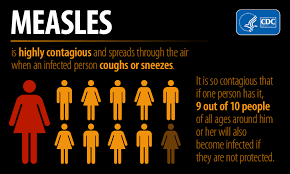
Under current law, county health officers have authority to exclude unvaccinated students from school during outbreaks of diseases like measles AAC 9 Title, Chapter 6 Article 33 AZ Administrative Code… a long-standing public health tool used to slow transmission and protect medically vulnerable children.

A tool that will be increasingly important as measles again becomes endemic because of falling vaccination rates (even without a constitutional amendment ending school vaccine requirements).

If this constitutional amendment passes, that authority would disappear too. During a measles outbreak in a school, local health officials couldn’t exclude unvaccinated students while the outbreak is being contained (until they get vaccinated).

Likewise, schools wouldn’t be able to protect students from exposures to diseases and conditions like Meningococcal meningitis, Diphtheria, Typhoid, Scabies, and even Lice.

Using the lice example, a school or preschool would no longer be able to send a kid home from school or preschool pending application of anti-lice medication (pediculicide). Same thing for the other diseases listed above.

Again, the proposal doesn’t say this directly, which is why it’s so sneaky.

HCR2056 Is a Constitutional Amendment — Not a Statute

Ending school vaccine requirements and the associated ability of schools and county health departments to respond to outbreaks would be in the Arizona Constitution making it nearly impossible to fix later.

Statutes can be adjusted as circumstances change. Constitutional amendments cannot. This would permanently limit Arizona’s ability to respond to future infectious disease threats.

The Political Reality

If HCR 2056 reaches the ballot, it’ll trigger a high-dollar campaign with the biggest pockets on the ‘vote yes side. Well-funded organizations like Turning Point Action and other national advocacy groups have already proven their willingness to invest heavily in ballot measures like this one.

Expect them to use simplified slogans about “medical freedom” and “parental rights” and use their dough to confuse people into voting yes.

Don’t expect clear explanations about the loss of school vaccine standards or the elimination of outbreak exclusion authority from their side. We’ll need to do that if it happens.

The Bottom Line

School immunization requirements have protected Arizona children for generations. Outbreak exclusion authority has prevented measles and other vaccine-preventable diseases from spreading widely in classrooms.

HCR 2056 would undo both.

The Senate now has an opportunity to prevent this measure from reaching the ballot. If it advances, Arizona’s public health and healthcare communities will face a difficult and expensive campaign to defend basic disease-prevention safeguards.

We’ll be collaborating with a host of others over the next couple of weeks to get the word out to the Senate about how bad HCR2056 is. We’ll see soon enough if it works.

If our advocacy doesn’t work – then we’ll need to pivot ourselves to a fall campaign to educate millions of voters about why this is BAD.