We Moved Up Our Flu Shots this Year

We usually get our COVID and influenza vaccines right before Halloween. Since AZ often has a later than normal (in the US) flu season I figure waiting until late October might help keep our protection stronger if we have a February flu peak like we often do.

This year, we our COVID vaccine earlier because the virus was running through my parents’ care facility. My mom caught it and spent a week in the hospital.

Then I started seeing early signals that influenza was picking up in the western US, so we moved our flu shots up to this weekend.

An October 7 NPR report describes early increases in flu activity in CA, WA,  Hawaii and Alaska. The CDC’s October 2 report describes national flu activity as low but increasing. Here in AZ Pima County reported 27 confirmed flu cases for the week ending September 19, up from 18 the previous week.

Nothing yet suggests that we’re going to have an early Arizona flu season, but the regional signals were enough for me to stop waiting until Halloween.

This year I chose Moderna’s new mRNA influenza vaccine, mFlusiva. A large clinical trial found about 27% fewer laboratory-confirmed symptomatic flu illnesses compared with a standard-dose shot.

I also wanted to share my experience with our members. I’ve been comfortable with the mRNA COVID vaccines, so I was interested in trying this new way.

I’m 66. mFlusiva is FDA-approved for adults 50+ with accelerated approval for those 65+. I could also have chosen an enhanced senior vaccine. The trial result doesn’t show that mFlusiva prevents more illness than those enhanced options.

I got it just a few hours ago so I can’t really tell you much about my experience yet.

You can follow local activity through Pima County’s respiratory reporting website and Maricopa County’s respiratory surveillance dashboard.

Which flu vaccine can you get?

  • Fluarix (GSK), FluLaval (GSK) and regular Fluzone (Sanofi): Standard-dose shots made using chicken eggs, licensed for ages 6 months and older.
  • Flucelvax (CSL Seqirus): A standard-dose shot made using cell culture rather than eggs, licensed for ages 6 months and older.
  • Flublok (Sanofi): An egg-free recombinant protein shot, made using insect cell culture, licensed for ages 9 and older.
  • Fluzone High-Dose (Sanofi): A shot made using chicken eggs, having four times the antigen of a standard-dose shot, licensed for adults 65 and older.
  • Fluad (CSL Seqirus): A shot made using chicken eggs, with an added ingredient that strengthens the immune response, licensed for adults 65 and older.
  • FluMist (AstraZeneca): A nasal spray made using chicken eggs, having weakened live influenza viruses, licensed for ages 2–49. It isn’t appropriate during pregnancy or for people with certain medical conditions.
  • mFlusiva (Moderna): An egg-free mRNA shot, manufactured without growing influenza viruses in eggs or cell culture, licensed for adults 50 and older, with accelerated approval for those 65 and older.

For adults 65+, CDC preferentially recommends high-dose, adjuvanted or recombinant vaccines. The American Academy of Family Physicians also includes mRNA among its preferred options.

Kennedy Says he’s Going to Improve VAERS That’s OK… but I Don’t Trust his Motives

Last week Kennedy announced several orders to change how the federal government identifies & investigates possible vaccine injuries. He says the changes will improve the surveillance. My gut tells me he has ulterior motives.

Kennedy says he’s going to build an NIH clinic for patients who report health problems following vaccination (harmless), reimburse physicians for reporting adverse events (reasonable), and make changes to the Vaccine Adverse Event Reporting System (VAERS) (that’s the one that’s troubling mostly because I don’t trust that his motives and changes will actually improve VAERS – but rather find ways to cook the adverse event books and misinterpret the results).

What VAERS Does

VAERS is an early-warning system jointly managed by CDC and FDA. Anyone can report a health problem occurring after vaccination, even without evidence the vaccine caused it.

VAERS casts a wide net to find possible safety signals needing further investigation. But VAERS reports alone can’t show cause and effect.

Setting the Record Straight: Vaccines Are Tested with Placebos, and that’s Just the Beginning Long & Thorough Safety Process

Vaccines Already Have Extensive Safety Oversight

As I explained in my June 2025 vaccine safety post, vaccines undergo multiple layers of safety evaluation before and after licensing.

Before licensing:

  • Preclinical testing: Laboratory and animal studies assess safety and immune responses.
  • Phase 1 trials: Small groups assess safety and dosing.
  • Phase 2 trials: Hundreds of participants help evaluate safety and immune responses.
  • Phase 3 trials: Usually thousands take part in controlled studies, often randomized and blinded, comparing vaccines with placebos or other controls.
  • FDA review: Scientists evaluate clinical evidence, manufacturing and quality controls before licensing.
  • CDC recommendations: Advisers assess benefits, risks and use.

After vaccine approval (licensing):

  • VAERS: Collects reports of possible adverse events and finds safety signals.
  • Vaccine Safety Datalink (VSD): Uses healthcare databases to investigate possible associations between vaccines and adverse events.
  • Clinical Immunization Safety Assessment (CISA): Evaluates complex cases and conducts specialized research.
  • FDA BEST system: Analyzes large healthcare datasets for possible safety problems.
  • Phase 4 studies: Continue evaluating safety and effectiveness after approval.
  • Manufacturing oversight: FDA inspections, quality testing and vaccine-lot review continue.

The Bottom Line

I’m all for improving VAERS and investigating potential vaccine injuries. Rare but real adverse reactions occur, and we need to have a surveillance systems to find them (which we do already have).

My concern is whether the administration will cook the VAERS books and intentionally espouse findings to discourage people from vaccinating, and that these changes are designed to do just that over the next 2 years.

But perhaps I’m just jaded – but I don’t think so.

Good vaccine safety surveillance should follow the evidence wherever it leads, not intentionally undermine confidence by confusing correlation with causation or spin results to reinforce predetermined anti vaccine administration ideology.

Protecting Arizona’s Elections: What Each of Us Can Do

What happens when federal power is used to undermine the elections it should help protect?

In this 40-minute recorded webinar, Protect Democracy examines threats to Arizona’s 2026 elections and steps people can take to protect the vote in their communities.

The discussion breaks down what Protect Democracy calls the “Deceive, Disrupt, Deny” approach:

  • Deceive: Spread misleading claims that make voters doubt election systems.
  • Disrupt: Interfere with the work of running elections.
  • Deny: Use the resulting confusion to reject election outcomes.

Protect Democracy explains how these tactics developed during the 2022 and 2024 elections and how they could affect Arizona in 2026.

The webinar also explores practical steps Arizonans—including people working in public health—can take to support fair elections and protect voters.

None of us can do everything, but all of us can do something.

Watch the 40-minute webinar here.
Passcode: %!iridK2

For more information, visit How You Can Protect Democracy and the Voting Rights Lab’s Election Risk Heat Map.

New York’s Measles Emergency: What Does an Emergency Declaration Actually Do?

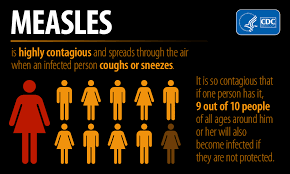
New York Governor Hochul declared a statewide measles disaster emergency on October 5 after NY state documented at least 108 cases of measles this year (it’s probably a lot more than that though).

Most recent cases have been in under-immunized rural upstate NY. Her declaration runs through November 4 unless extended.

But what does declaring an emergency actually do?

No. 65: Declaring a Disaster Emergency in the State of New York Due to an Ongoing Measles Outbreak essentially temporarily expands the scope of practice for a host of health professionals so they can vaccinate people more quickly.

It also lets state agencies buy supplies and services faster (easing their procurement policies). Her goal seems like an attempt to get ‘all-hands-on-deck’ by helping county health departments reach unvaccinated and under-vaccinated people much faster.

New York’s Executive Order 65 makes several specific changes:

  • Pharmacists can vaccinate younger kids. They can administer the measles, mumps and rubella vaccine to kids age 2 and older under standing orders (relieving pediatric office bottlenecking).
  • Paramedics can give MMR vaccines at community clinics and other non-emergency locations.
  • Midwives can vaccinate a broader population, beyond their usual patients (under specified supervision and conditions).
  • Registered nurses can order measles testing. Standing orders expand RN’s scope so they can collect throat, nasal, urine and blood specimens without getting a separate order for each patient.
  • State agencies can use faster emergency procurement and contracting to obtain supplies, equipment and services that support the response.

These changes give counties more people to staff vaccination clinics and help families find vaccination closer to home. They also remove regulatory barriers that otherwise slow down testing.

Faster testing will give county health departments earlier warning about where measles is spreading so they can find exposed people, check immunity and vaccinate while there’s still time to prevent illness.

NY county health departments were already investigating cases, tracing contacts and offering vaccines before the declaration. But under the new Order they can expand the workforce and speeds up their response

They can also use pharmacists, paramedics and midwives as a temporary surge workforce to vaccinate (and a surge workforce using RN’s to collect specimens etc.)

People born before 1957 generally had measles as children and are presumed immune.

Adults vaccinated before the two-dose recommendation began in 1989 (people currently between 37 and 66 years old now) may have received only one dose. One is still sufficient for most adults, but a second is recommended for healthcare workers, international travelers and college students.

People younger than 37 likely to have received the two-dose childhood series and don’t need a booster.

Editorial Note: In my view, New York’s approach is precisely how public health emergency authorities should be used: temporarily remove barriers, expand the workforce and give county health departments more tools to protect people.

Arizona experienced a misuse of public health emergency authority during the pandemic. Governor Ducey and health director Christ initially blocked local mask requirements and used their emergency authority to prohibit state and local governments from requiring proof of COVID-19 vaccination for entry or services.

Their executive orders called vaccination records “vaccine passports” giving an ordinary public health tool a politically loaded label. In my view, those restrictions and many others in which Ducey and Christ preempted local government, schools, and even businesses from taking reasonable response measures. That undermined the response by taking protective options away from local officials and ended up harming, not helping the response.

We Need a Federal Law to Make Sure Data Centers Pay Full Freight for their Power Infrastructure

Why the Senate GRID Savings Act is Better than the House Bill

State legislatures generally set the rules for utility regulation, while corporation commissions / public utility commissions oversee investor-owned utilities and decide their rates and how costs are divided among customers.

In Arizona that’s the Arizona Corporation Commission.

That regulatory system depends on regulators putting the public interest first. In my view, too many of these institutions across the country (including Arizona’s Corporation Commission) have been captured by the industries they’re supposed to regulate. They tend to just rubber stamp rate increases.

That’s why we need federal action to protect regular electricity customers like you and me as giant data centers create enormous new demand for power.

Congress actually does have a couple of proposals that have been proposed. Both address that problem, but there’s a big difference in how they would work.

The House Bill: Consider Protecting Customers

The House’s  Ratepayer Protection Act (H.R. 9340) targets new data centers with peak electricity demand of at least 100 megawatts.

The bill suggests that the data centers pay the full added costs of generation, transmission and distribution upgrades needed to serve them.

But – all it really says is that state regulators (e.g. the AZ Corporation Commission for example) would have to consider making them pay full freight but wouldn’t have to adopt it. Basically, there’s no real enforcement.

It strikes me as a bill that makes it seem like congress is acting when it’s really not.

The House passed it 417–3 and the Senate voted 57–43 to advance it last week, which is short of the 60 votes needed to actually vote on it for real. Our Senators both voted no. I would have too.

The Senate Bill: Require Protections

Over in the Senate there is the GRID Savings Act (S. 5199) which is much more enforceable. It covers new or expanded nonresidential electricity demand of at least 150 megawatts. Its most important element, it:

  • Establishes enforceable federal rules. Direct FERC (the Federal Energy Regulatory Commission a federal agency that regulates interstate electricity transmission and wholesale electricity) to regulate how data centers connect to the interstate transmission system.
  • Makes them pay for their connections. Assign them 100% of the costs of connection facilities and facilities built solely for their use.
  • Protects against abandoned projects. Require financial guarantees to prevent unrecovered costs from landing on other customers.
  • Requires clear accounting. Discloses facility costs, who pays them and how those costs will be recovered.
  • Evaluates alternatives and protect reliability. Considers storage, flexible electricity use and advanced transmission technologies while requiring reliable grid operation.

Why I Like the Senate Bill More

The Senate bill has more regulatory muscle because it requires federal action and doesn’t rely on captured local and state commissions – plus it’s not voluntary compliance like the House bill.

In Arizona, I have little confidence that another instruction to consider protecting customers would produce meaningful change. The GRID Savings Act would make protections within its jurisdiction a requirement rather than a choice.

Summary

Data centers should pay for their own generation infrastructure. The core responsibility to make sure that happens is really at the state and local level – but the Senate Grid Savings Act does a nice job leveraging the fact that electricity in almost all states is interstate – which allows the FERC to have authority to at least provide some consumer protections.

We urge our delegation to support the GRID Savings Act (S 5199)


Analise_Ortiz_Clean_Energy_Contact_Summary

Alberto_Flores_Clean_Energy_Contact_Summary

Arizona’s Energy Choices: More Solar, Responsible Siting & Fair Electric Bills

Arizona needs more electricity. Population growth, data centers and electrification are adding demand. How we meet that demand—and who pays for it—will have big consequences for public health.

As utility bills take a bigger bite out of household budgets, families have less money for groceries, prescriptions and rent. Some turn down the cooling to save money. In Arizona, which can become a health and safety problem.

Solar & Storage Have an Important Role

Solar can help meet Arizona’s growing electricity needs without combustion air pollution, ongoing fuel purchases or the substantial cooling-water requirements of many thermal power plants.

Battery storage makes solar more useful by moving daytime electricity into the evening, when solar production drops but air conditioners keep running.

Utilities should compare the full costs of competing options, including generation, storage, transmission and reliability. And regulators need to make sure savings actually reach customers.

State policy matters too. Arbitrary restrictions can block otherwise suitable projects and narrow our options for meeting demand affordably.

That’s why I support the Governor and State Land Department’s consideration of prioritizing suitable state trust land for long-term utility-scale solar leases, which still protects trust beneficiaries (e.g. K-12 education).

Agrivoltaicsdeserves consideration too. Combining solar with compatible crops or grazing can preserve agricultural activity. U of A research found that panel shade can help some crops and improve water-use efficiency. The right design depends on the land and agricultural use.

Data Centers Should Pay the Costs They Cause

Approving a solar farm and approving a data center are different decisions. One supplies electricity. The other consumes it.

When a data center requires more generating capacity, transmission or substations, residential customers shouldn’t subsidize the costs attributable to that facility.

Pima County’s public health reviewprovides a useful framework for examining those broader consequences alongside water use, noise, air pollution and community vulnerability.

Responsible Siting Makes Development Better

Solar and battery projects have legitimate siting issues. Protect sensitive habitat. Manage dust and drainage. Consider nearby homes. Require enforceable decommissioning plans and financial assurance.

Battery projects also need proper separation, hazard analysis, emergency plans and coordination with local firefighters.

The policy goal is straightforward: expand affordable, reliable electricity while protecting nearby communities and household budgets.

I’ve pulled these issues together in a presentation for Arizona lawmakers below:

Solar Energy Candidate Education Presentation
Arizona Energy Future Candidate Education Summary (Group)
SW Gas Rate Case Comments October 2026

AHCCCS 101 in Real Life: A Medicaid Contractor Changes Ownership Shifting From Non-Profit to For-Profit?

Back in April I did a four-part AHCCCS 101 series explaining how Arizona’s Medicaid program actually works. This post sheds some light on some of the behind-the-scenes administrative mechanics of how AHCCCS works in real life.

Part 1: AHCCCS’ Origin Story – Why Arizona Built Medicaid Different

Part 2: Waivers, State Plan Amendments and Who Decides

Part 3: Contract Management & Accountability

Part 4: From Coverage to Care – The Member Experience

Right now one of the biggest managed care organizations that AHCCCS contracts with is Mercy Care, which is owned in part by a nonprofit called Ascension. Ascension then contracts with (for profit) Aetna, who oversees many of the day-to-day operations of Mercy Care.

A couple weeks ago Ascension said they want to sell their ownership stake in Mercy Care to Aetna (which is owned by CVS Health – obviously a for profit organization). Here are the organizational basics:

Mercy Care is an Arizona nonprofit corporation/not-for-profit managed-care organization. Its audited financial statements filed with AHCCCS shows it as a nonprofit.

Ascension is a nonprofit Catholic health system. Its Mercy Care ownership interest is held through nonprofit entities.

Dignity Health/CommonSpirit, Mercy Care’s other owner, is also nonprofit.

Aetna is for-profit and is owned by CVS Health. Aetna has administered Mercy Care’s day-to-day operations since 2002, but the proposed transaction would shift all of Ascension’s ownership to Aetna.

Arizona built its Medicaid program differently from most states when AHCCCS started in 1982. Rather than having the state pay doctors, hospitals and other providers directly for each service, Arizona built the program around managed care.

AHCCCS contracts with a few health plans (including Mercy Care) and pays them a fixed amount of money per member per month. The plans then build provider networks, authorize services, pay claims and manage the healthcare for their members.

AHCCCS plays an oversight role as the regulator and actual buyer of the healthcare (on behalf of AZ taxpayers). In a nutshell, AHCCCS’ main job is contract management.

Mercy Care 101

Mercy Care currently covers over 300,000 Arizonans across its Medicaid and Medicare/Medicaid programs. Statewide AHCCCS currently has about 1.7 million people enrolled in its various health plans – so Mercy Care covers a big chunk of the total. In other words – a big contractor for AHCCCS

Among those Mercy Care’s members are folks covered for low-income adults, kids and families for regular doctor’s visits, hospitalizations, medically necessary surgery and primary care. It also has responsibility for physical and behavioral healthcare for people with much more complicated needs, like persons with developmental disabilities and folks with a serious mental illness etc.

Mental Health

Within that system are roughly 50,000 Arizonans designated as having a Serious Mental Illness. In Central Arizona, Mercy Care is the Regional Behavioral Health Agreement (used to be called authority) responsible for that population.

Long Term Care

Then there’s ALTCS – the Arizona Long Term Care System. About 26,000 Arizonans are in the ALTCS Elderly and Physically Disabled program. These are folks who meet nursing-facility-level-of-care criteria, but who often receive services at home or in community settings instead of a nursing home. Mercy Care is one of the ALTCS-EPD contractors in Maricopa, Gila, Pinal and Pima Counties.

Then there are people with intellectual and developmental disabilities. Arizona’s Division of Developmental Disabilities serves more than 59,000 Arizonans. Many qualify for ALTCS and receive extensive home and community-based services like attendant care, habilitation, respite, day programs, employment support and residential services.

Note: ADES/DDD manages most of those home and community-based services and contracts with the providers that deliver them. Mercy Care is one of the health plans DDD uses for physical and behavioral healthcare and certain other services – all through AHCCCS.

So, What’s Changing?

Ascension and Dignity Health have jointly sponsored Mercy Care, which was founded in 1985. Now Ascension wants to sell its ownership interest to Aetna, a subsidiary of CVS Health/Aetna.

Aetna has actually administered Mercy Care’s day-to-day operations for more than 20 years. So this isn’t like some completely new company suddenly showing up.

But – it’s definitely a significant ownership change from a nonprofit parent company (Ascension) to a for profit company (CVS/Aetna).

I’m not suggesting that Mercy Care will be worse under the new ownership structure – but it does mean that AHCCCS, whose main job is contract management – should be on the lookout after the sale to ensure that the new ownership structure doesn’t end up compromising the network or care.

You can read more about the transaction here: Ascension Sells Ownership in Arizona Medicaid Plan to Aetna

Regulatory Approval

The buyout isn’t a done deal yet and there are some regulatory boxes that will need to be checked before this actually happens for real.

AHCCCS would still need to approve the buyout. Mercy Care can’t simply change ownership and continue its AHCCCS contracts without AHCCCS approval. AHCCCS contract provisions specifically say that a proposed “merger, reorganization [or] change in ownership” requires prior AHCCCS approval and may require amendment of the Medicaid contract.

The Arizona Department of Insurance and Financial Institutions (DIFI) regulates insurance-company acquisitions and changes of control, and Arizona law requires regulatory review of acquisitions involving control of insurers. Under A.R.S. §20-481.07, the DIFI director examines such things as whether the acquisition could jeopardize the insurer’s financial stability, reduce service to policyholders, lessen competition, or result in management that isn’t in public interest.

For now, this is something worth paying attention to – and I’ll track this for us and write future posts about how things progress.

Opinion: Tucson needs a Gun Violence and Criminal Justice Scorecard

Guest Blog by AZPHA member Mike Humphrey

Tucson has reason to be encouraged by the recent decline in violent crime. But we should resist the temptation to turn that good news into a political victory lap.

Before we congratulate one program, agency or elected official — or blame another — we should answer a more basic question:

What is actually working to reduce violence in Tucson?

We don’t have a good enough answer. We need one. Tucson and Pima County should create a public 2020-2025 Gun Violence and Criminal Justice Scorecard that brings together the information necessary to evaluate our public-safety strategies. This should not be a partisan exercise. It should be an accountability tool for our community.

Reported violent-crime statistics are an important starting point, but they don’t tell us everything. Crime victims that don’t report generally don’t appear in police statistics. Changes in police staffing, enforcement practices, victims’ willingness to report and crime-reporting systems can also affect what gets recorded. That doesn’t make the statistics meaningless. It means we need to understand their limitations.

A decline in reported crime is encouraging. But it isn’t necessarily proof that actual violence declined by the same percentage. And when a policy is followed by a decline in crime, that doesn’t prove the policy caused it. National crime trends, economic conditions, demographic changes, firearm availability, drug markets and community-based violence-intervention efforts may also contribute.

That’s why Tucson needs a broader scoreboard.

The scorecard should track, year by year:

  • Homicides and firearm homicides;
  • Nonfatal shootings and shooting victims;
  • Violent crime-related hospitalization costs; 
  • Aggravated assaults and robberies involving firearms;
  • Total reported violent crime;
  • Police calls for service involving violence, weapons and disturbances;
  • Tucson Police Department staffing levels and arrests;
  • Violent-crime clearance rates;
  • Prosecution, dismissal and diversion rates;
  • Sentences and probation outcomes for serious violent and firearm offenses;
  • Prohibited-possessor firearm prosecutions; and
  • Participation and outcomes of community-based violence-intervention and diversion programs.

Just as important, every number should identify its source, definition and geographic scope. A Tucson Police Department statistic should not be confused with a Pima County statistic. An arrest should not be confused with a prosecution, and a prosecution should not be confused with a conviction.

There are already promising signs worth examining. The Pima County Attorney’s Office reports that it charged 572 prohibited-possessor firearm cases in 2024, while federal partners charged another 60 through the Public Safety Partnership. Those numbers suggest substantial firearm enforcement. But they don’t tell us whether that enforcement reduced future violence.  That’s precisely why we need better measurement.

If prosecution is preventing repeat offenders from committing new crimes, let’s demonstrate it. If police strategies are reducing shootings, let’s measure the effect. If community violence-intervention programs are saving lives, let’s identify what works and expand it. And if inadequate staffing or unreported crime is causing official statistics to understate violence, the public deserves to know that, too.

We should demand the same evidence from every approach to public safety.  Tucson doesn’t need another argument based on competing political narratives or selective statistics.

We need a common set of facts. We need to know what we know, what we don’t know and what the evidence actually supports. A publicly available Gun Violence and Criminal Justice Scorecard would give Tucson something it currently lacks: a factual basis for deciding which public-safety strategies deserve to be continued, expanded or changed.

Good public policy begins with good information. Tucson should start collecting and reporting it.

Stay Current on Vaccines: Free Online Learning for Healthcare Teams

Give vaccines or help patients stay up to date on their immunizations? The Vaccine Science & Practice ECHO offers a chance to learn from experts, discuss real patient cases, and connect with other healthcare professionals.

This online learning series is offered in collaboration with the Arizona Department of Health Services and the ASU Health Observatory. Monthly sessions begin October 20.

The program is open to physicians, pharmacists, nurses, medical assistants, and other healthcare team members who give vaccines or support immunization services.

Each session combines an expert presentation with group discussion of real patient cases. Topics include:

  • The science behind vaccine recommendations.
  • National and Arizona vaccination data.
  • Updates to federal vaccine guidelines and recommendations.
  • Ways to talk with patients and families about vaccines.
  • Putting the evidence into practice in everyday patient care.

Free continuing education credits (CME/CEU) are available to participants.

Register for the Vaccine Science & Practice ECHO here

Public Health AI 101: A Free Professional Development Opportunity

AI is moving quickly into just about every part of our lives – including public health.

For people working in public health, the challenge is figuring out what AI can actually do, where it can be useful, and how to use these new tools responsibly.

The UA College of Public Health is helping with that. Through its AI for Public Health Initiative, the College is offering a completely free online Public Health & AI course for public health professionals across Arizona.

The course is self-paced, introductory, and designed for people who don’t have a technical background in artificial intelligence.

There are 14 short videos covering topics including artificial intelligence, data visualization, wearable devices and other emerging technologies that are becoming increasingly relevant to public health practice.

There’s no complicated enrollment process.

Just go to: https://ph-ai.me/online-track/index.html